Atlas of companion toys
atlas150 companion toys and robots I could find, from Chatty Cathy (1960) to iMoochi (2026). 61 of them are taken apart into five layers: body, brain, relationship, illusion of life, fate; 89 more are one line each in a census by country. I collected them to build my own: a simple toy with a small neural network right on the chip.
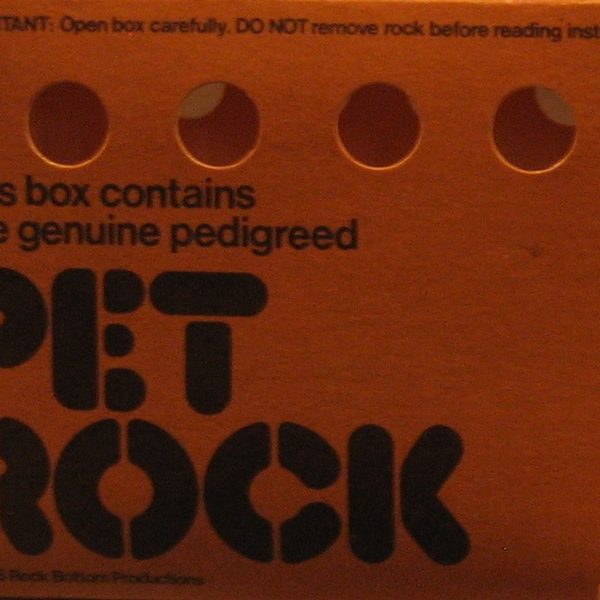 Pet Rock
Seems alive: A box with air holes and a care manual
Fate: About 1.5 m in half a year, then the fad passed; reissued since 2023
Photo: Hempdiddy · public domain
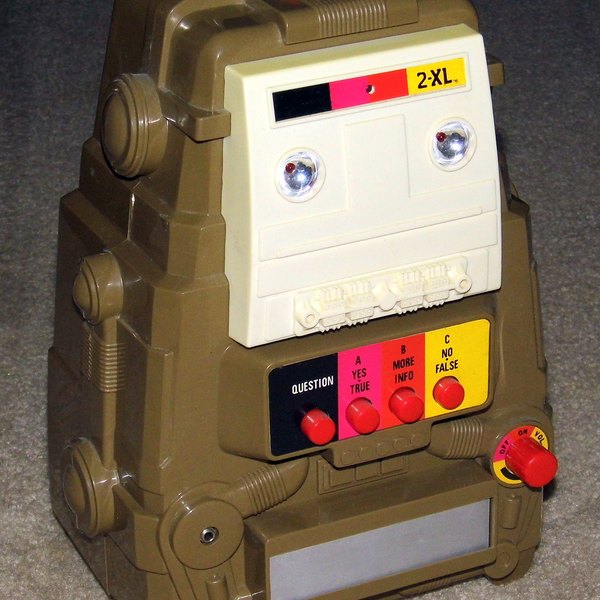 2-XL
Seems alive: Asks a question; the child answers with a button
Fate: Over 200,000 by summer 1979 (a magazine; source of the figure □); dropped in 1981–82; Tiger version 1992–95
Photo: Joe Haupt · CC BY-SA 2.0
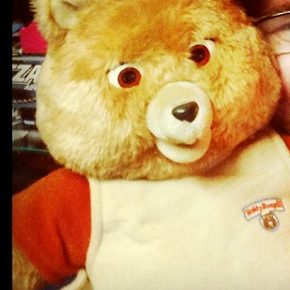 Teddy Ruxpin
Seems alive: Mouth and eyes move with the voice
Fate: Over 8 m made; the maker went bankrupt, the brand lives on
Photo: JeepersMedia (Mike Mozart), Flickr · CC BY 2.0, cropped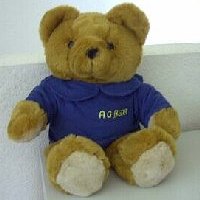 A.G. Bear
Seems alive: Mumbles back with the same intonation
Fate: About 600,000 in five months (company figure); withdrawn
Photo: Illharmonics00 · public domain
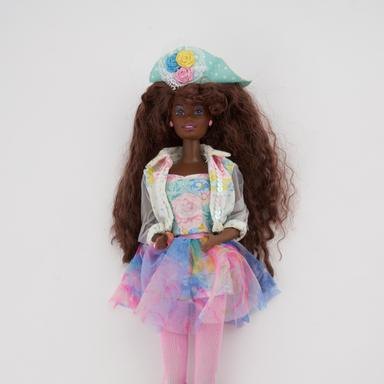 Teen Talk Barbie
Seems alive: Says four phrases out of 270; each doll has its own set
Fate: About 350,000 made; "Math class is tough!" led to a national dispute in October 1992
Photo: Science Museum Group Collection · quoted for review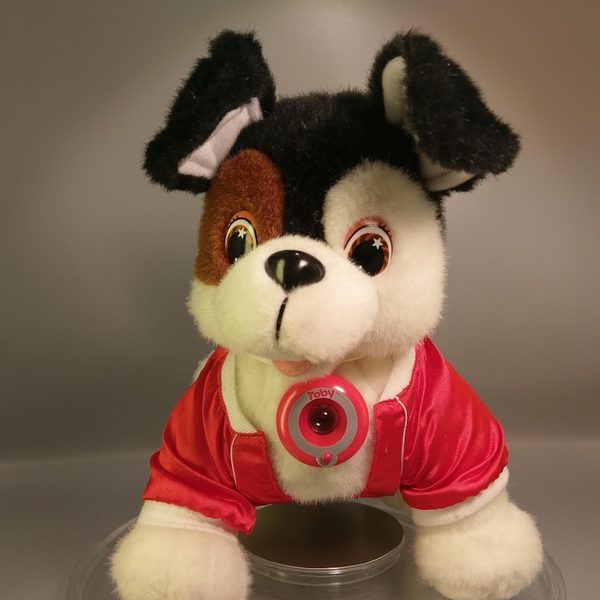 Toby Terrier
Seems alive: Comments on the video as it plays
Fate: Withdrawn; sales figures not found
Photo: © Tiger Electronics, photo by rePLAYcements · quoted for review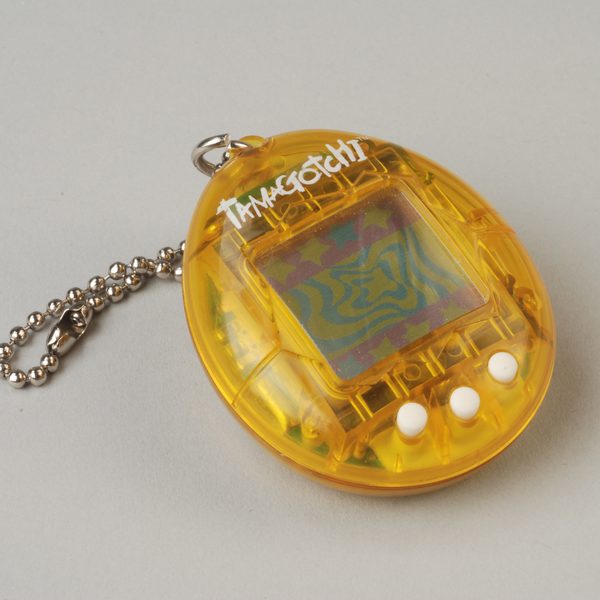 Tamagotchi
Seems alive: Calls with a beep; death is final
Fate: 98.1 m sold by 2025; on sale
Photo: Museum Rotterdam · CC BY-SA 3.0, cropped
 Tickle Me Elmo
Seems alive: Laughs more with each squeeze; at the third it shakes with laughter
Fate: About 1 million in 1996 and 4 million in 1997 (Tyco staff); sold out for weeks
Photo: BlackCow · CC BY-SA 3.0
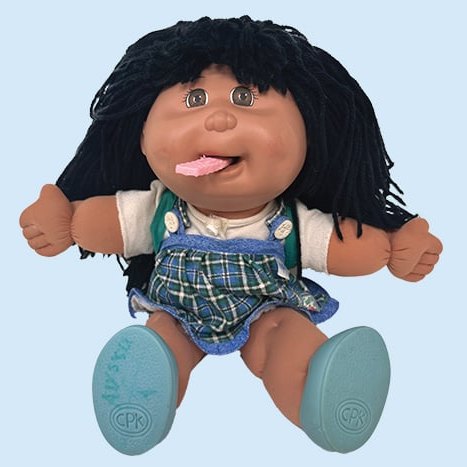 Cabbage Patch Snacktime Kids
Seems alive: Chews plastic snacks and drops them into a backpack
Fate: About 500,000 sold; refund programme from 6 January 1997 after hair and fingers were caught in the mouth
Photo: The Strong National Museum of Play, via Scholastic Storyworks, 2025 · quoted for review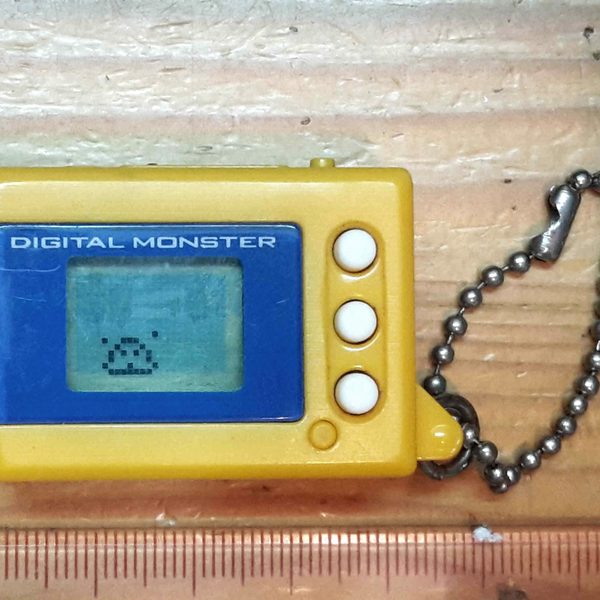 Digital Monster
Seems alive: Two toys battle through metal contacts
Fate: Over 8 m (Bandai) to 14 m (ANN); the brand is alive
Photo: S03311251 · CC BY-SA 4.0, cropped; Digimon Mini, a 2016 reissue
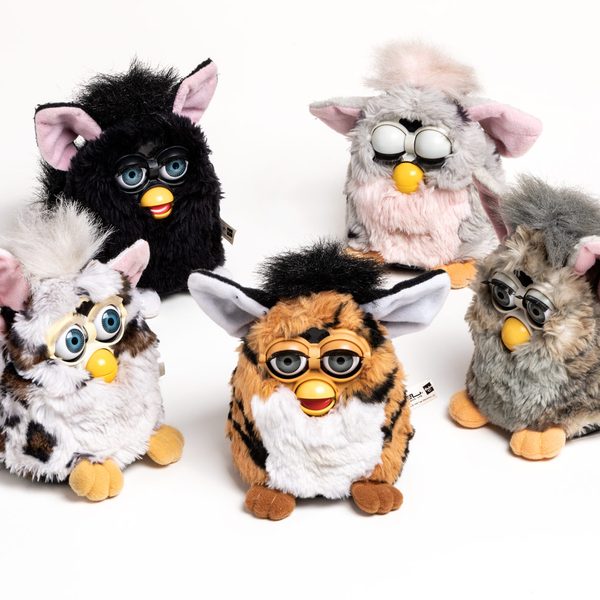 Furby
Seems alive: A language of its own; "learns" English on a timer
Fate: Over 58 m; on sale
Photo: Landesmuseum Württemberg · CC0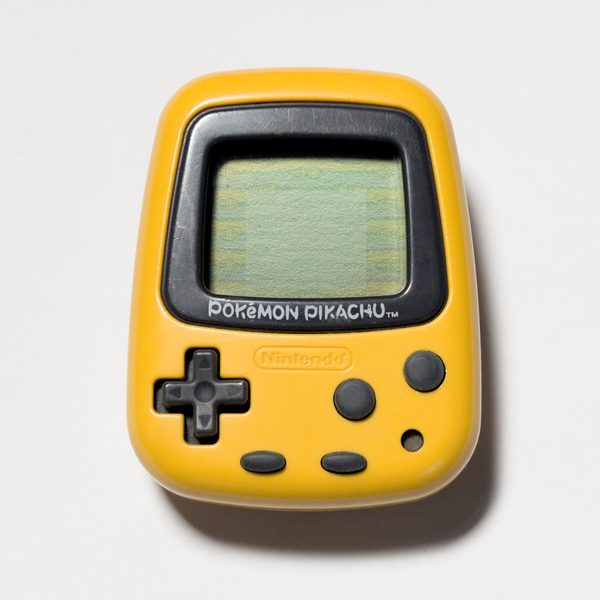 Pocket Pikachu
Seems alive: Its food is the owner's steps; a sulk can be undone
Fate: Over 2.5 m in the first 30 days in Japan ◆; the line ran until 2009
Photo: JudeHalley · CC BY 4.0, cropped
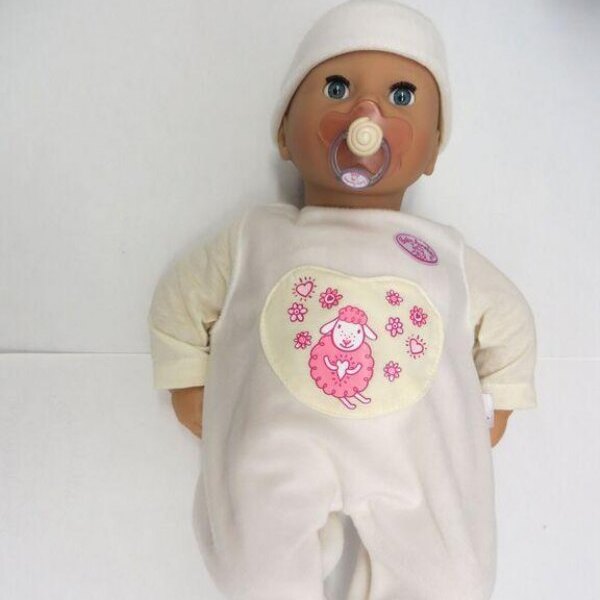 Baby Annabell
Seems alive: Sleeps, cries at noise and, per press, knows the sound of its rattle ◆
Fate: UK's best-selling girls' toy every year 2001–2007; still sold ◆; unit sales □
Photo: © Victoria and Albert Museum, London · quoted for review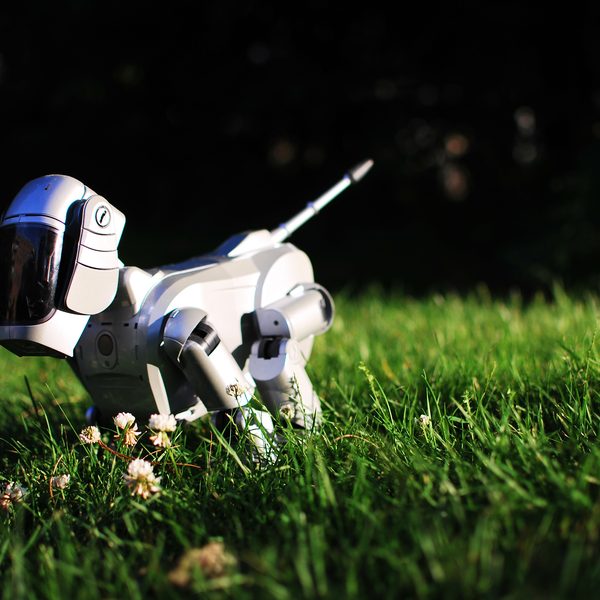 AIBO
Seems alive: Unexpected behaviour; knows its owner
Fate: About 150,000; closed in 2006; the new one is on sale
Photo: Morgan from Montreal, Flickr · CC BY 2.0, cropped
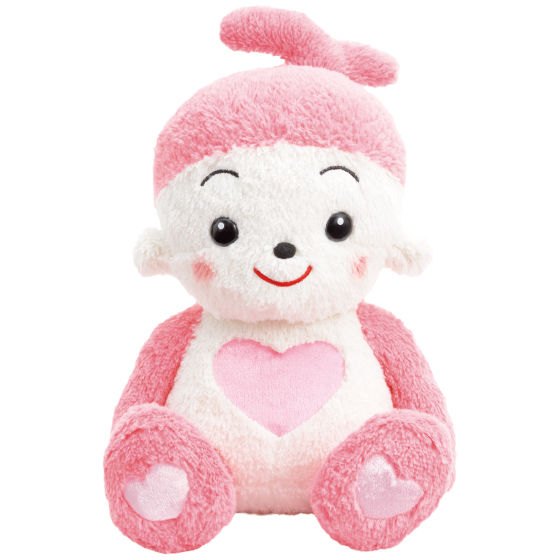 Primopuel
Seems alive: Answers touch in seven places; sulks when ignored
Fate: Over 1 million shipped in five years (Bandai); repair "hospital" closed in 2018
Photo: Bandai (product photo, 2013 model) · quoted for review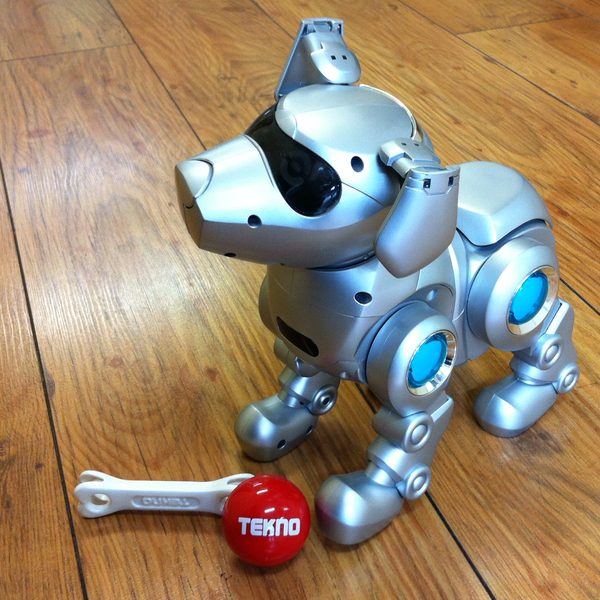 Tekno
Seems alive: Cheap senses and the frame "an 8-week-old puppy"
Fate: Over 7 m in a season, over 40 m in 4 years ◆; withdrawn
Photo: Toyloverz · CC BY-SA 3.0, cropped
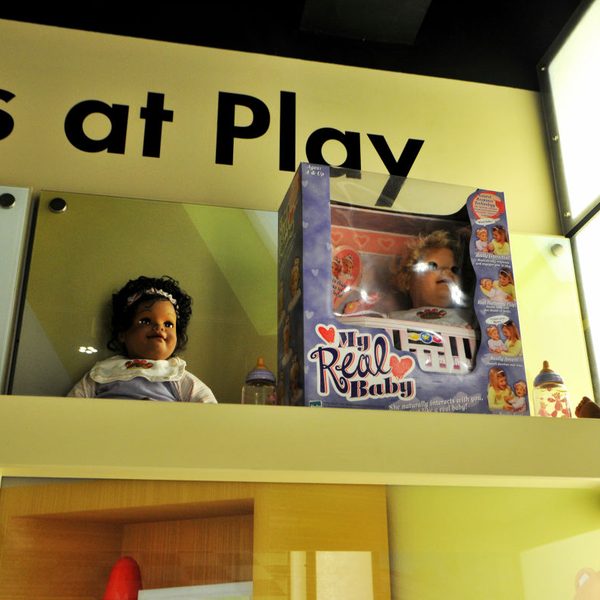 My Real Baby
Seems alive: Facial expressions on one motor; rock it and the eyelids droop
Fate: Not a commercial success; withdrawn; sales □
Photo: © Gigazine, iRobot museum · quoted for review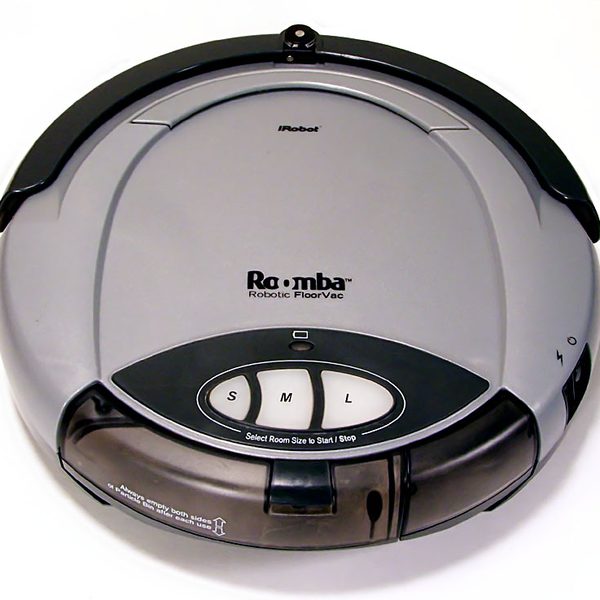 Roomba
Seems alive: Gets stuck, and owners fill in the character
Fate: Over 2 m by 2007; iRobot bankrupt in 12.2025, still sold
Photo: Larry D. Moore · CC BY 4.0, cropped
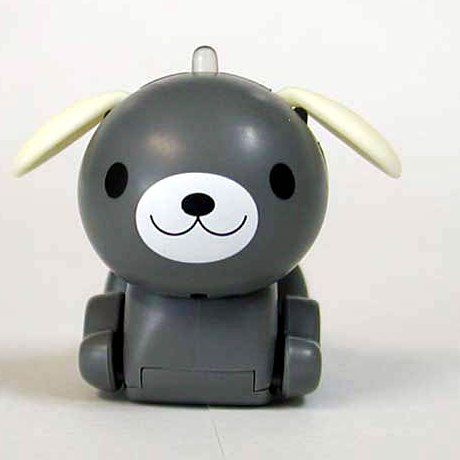 Micro Pet
Seems alive: Comes when called; "heard" and "understood" show separately
Fate: About 10 m shipped across generations (Takara Tomy); relaunched in 2025
Photo: Game Watch (Impress), 2002 · quoted for review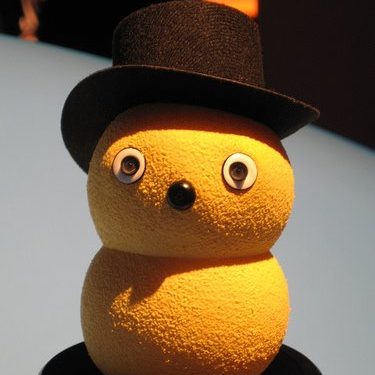 Keepon
Seems alive: Dances to the beat
Fate: No longer sold
Photo: Ilikedudes, Wikipedia · CC BY 3.0, cropped
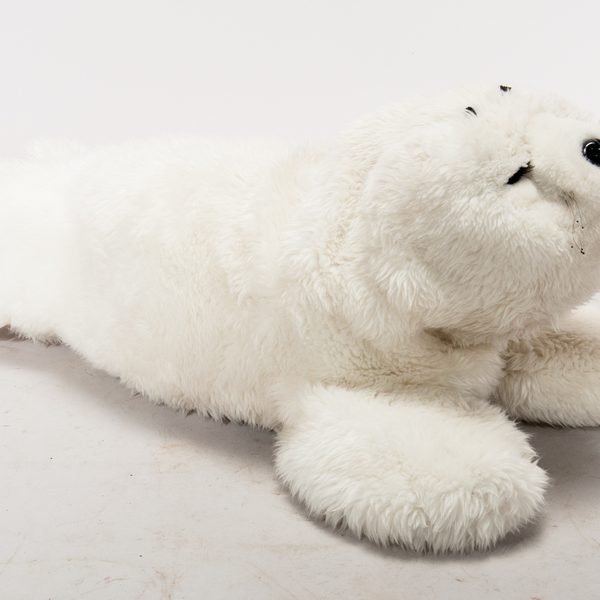 Paro
Seems alive: Responds to stroking
Fate: Over 7,000 made; on sale
Photo: Tekniska museet / Peter Häll · CC BY-SA 4.0, cropped
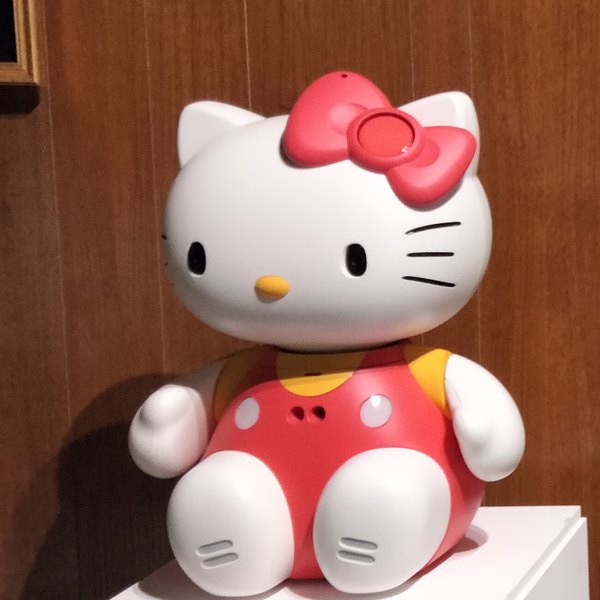 ?Hello Kitty Robo
Seems alive: Turns to a visitor, calls them by name, tells fortunes
Fate: Launch set for 1 Nov 2004; units sold □; reception model in 2005
Photo: Enric · CC BY-SA 4.0 (cropped)
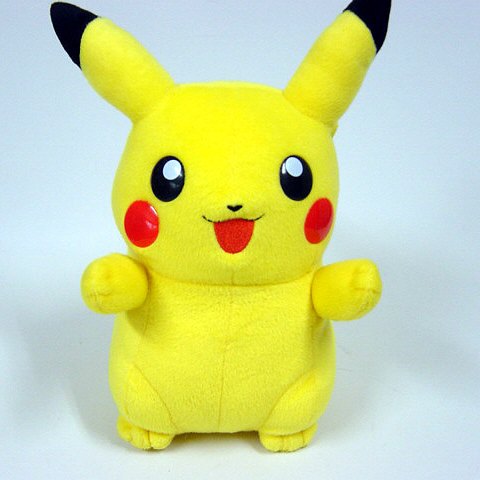 Tomodachi Pikachu
Seems alive: Answers the tone of your voice, not the words
Fate: Sales □; no longer sold ◆
Photo: Game Watch (Impress), 2006 · quoted for reviewSeems alive: Follows a person; speaks in Tokyo or Kansai dialect
Fate: Sales and end date □; one open source only
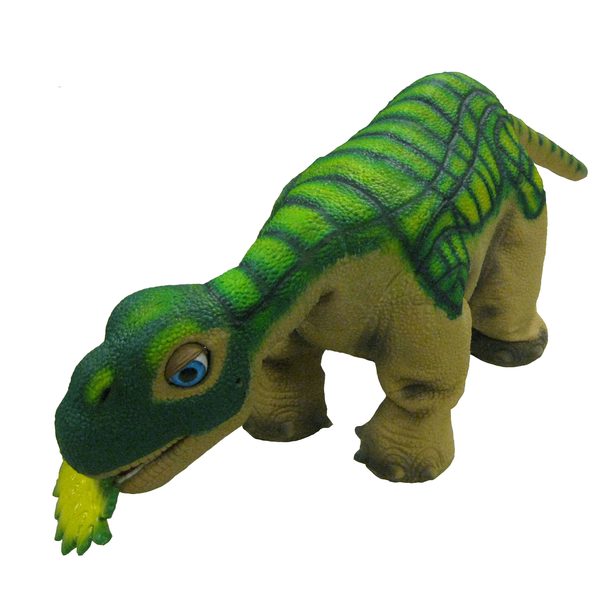 ?Pleo
Seems alive: 14 motors, skin with sensors
Fate: 100,000 in 2008; Ugobe bankrupt in 2009; what came next is unclear
Photo: Jiuguang Wang · CC BY-SA 3.0, cropped
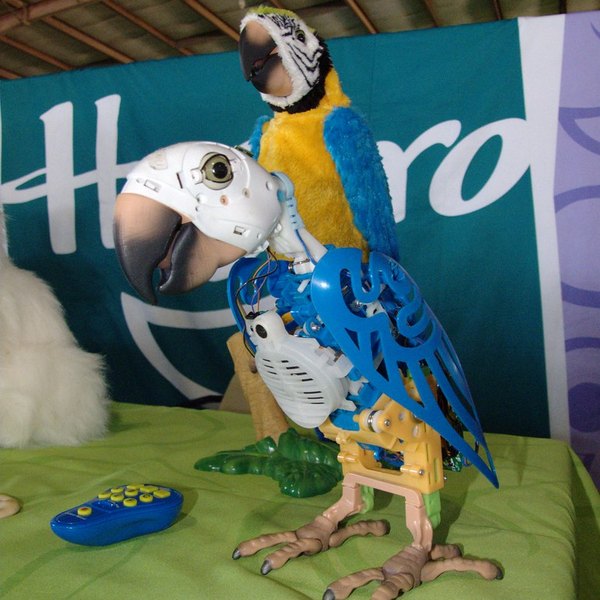 Squawkers McCaw
Seems alive: Repeats you in a squawky voice and answers phrases its owner taught it
Fate: On sale 2007–2009; TV ads pulled in 2008 ◆; sales □
Photo: steevithak · CC BY-SA 2.0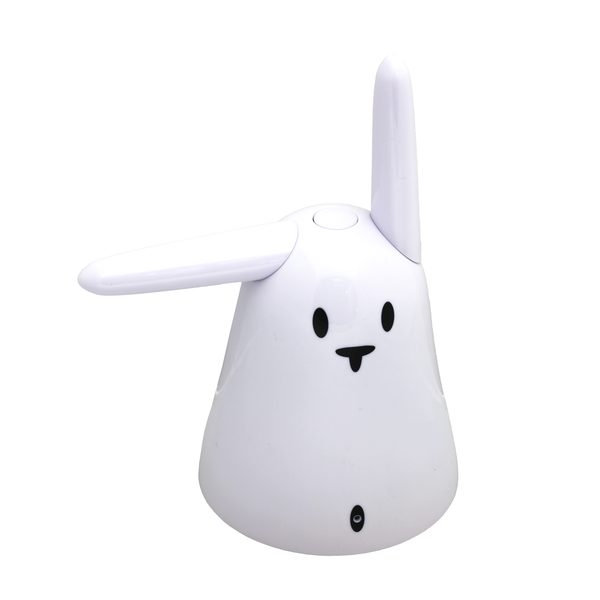 Nabaztag
Seems alive: Ears and light instead of a screen
Fate: Servers switched off in 2011; revived by its owners
Photo: Rama, Musée Bolo · CC BY-SA 2.0 FR, cropped
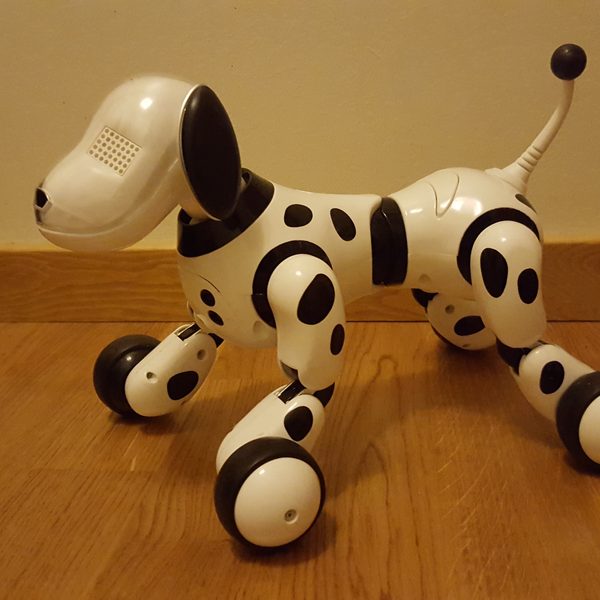 Zoomer
Seems alive: Listens after you touch its head; sometimes "forgets"
Fate: Over 5 m — the creator's words ◆; the line is alive
Photo: RefDr · CC BY-SA 4.0, cropped
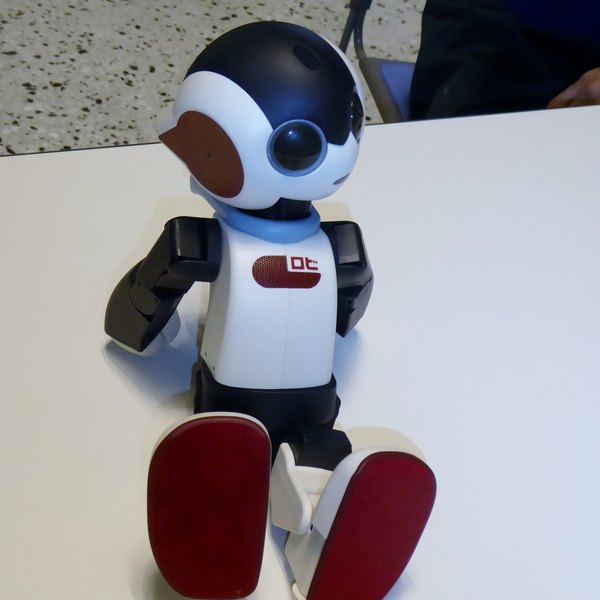 Robi
Seems alive: The owner builds it over a year and a half; it walks, dances and answers
Fate: Issue 1 over 100,000 copies (another source says over 200,000); about 60,000 built in the first run; series ended
Photo: Tokumeigakarinoaoshima · CC0
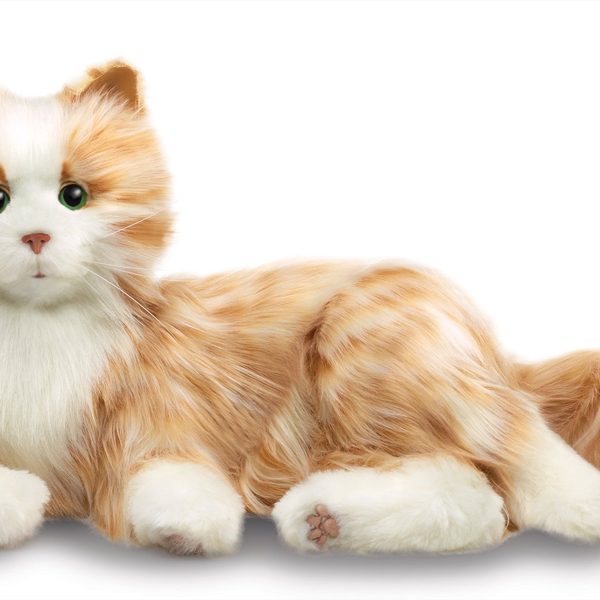 Joy for All
Seems alive: A purr you feel in your palm
Fate: On sale; over 750,000 — company figures
Photo: © Ageless Innovation · quoted for review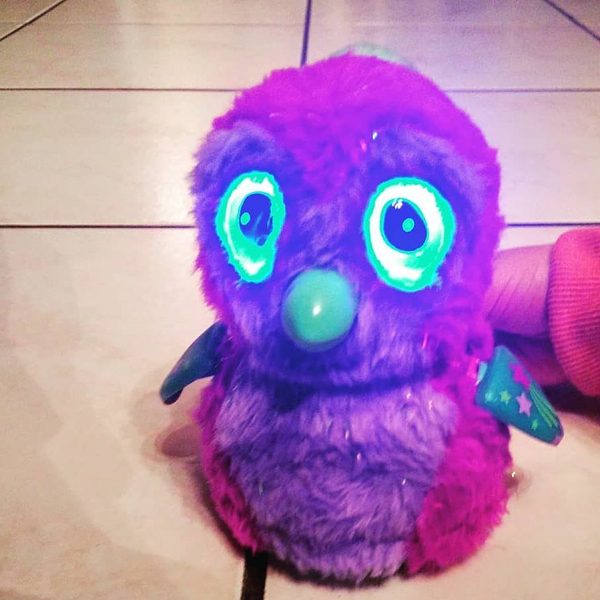 Hatchimals
Seems alive: Hatches by itself, once, in 10–40 minutes
Fate: About 2 m in 2016 (analyst estimate); the robot was dropped in 2017
Photo: DaffyDuke, Flickr · CC BY-SA 2.0, cropped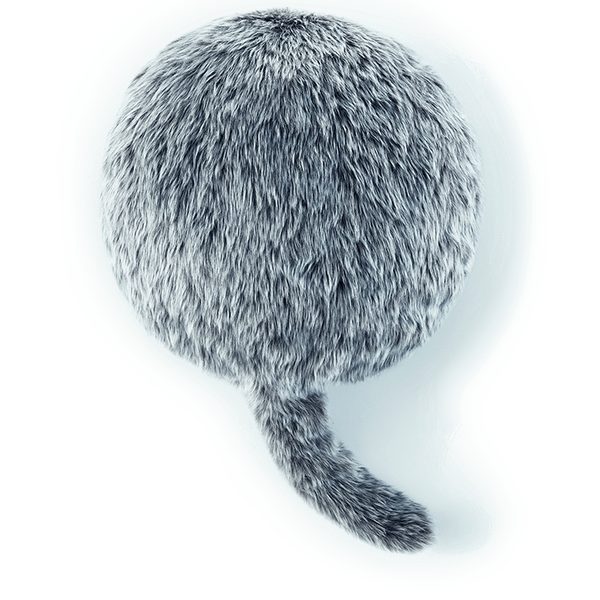 Qoobo
Seems alive: Just a tail; the answer follows how hard you stroke
Fate: Alive; 30,000 by 09.2021 (Yukai)
Photo: © Yukai Engineering · quoted for review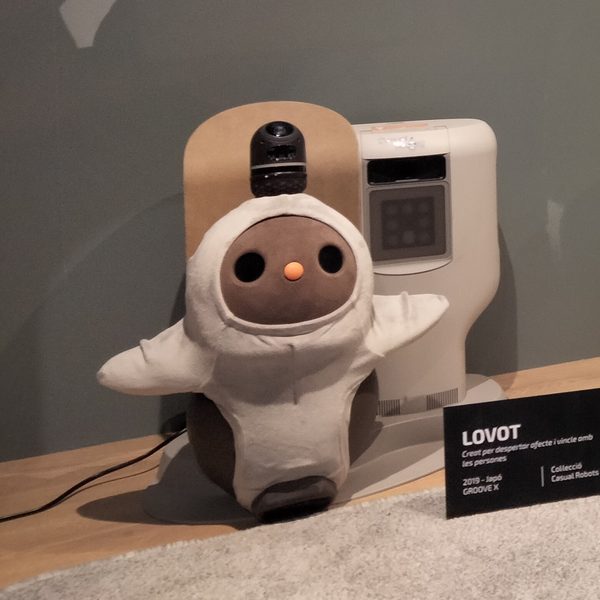 LOVOT
Seems alive: Warm; asks to be picked up
Fate: Over 18,000 in use (2026); on sale
Photo: Enric, MNACTEC exhibition · CC BY-SA 4.0, cropped
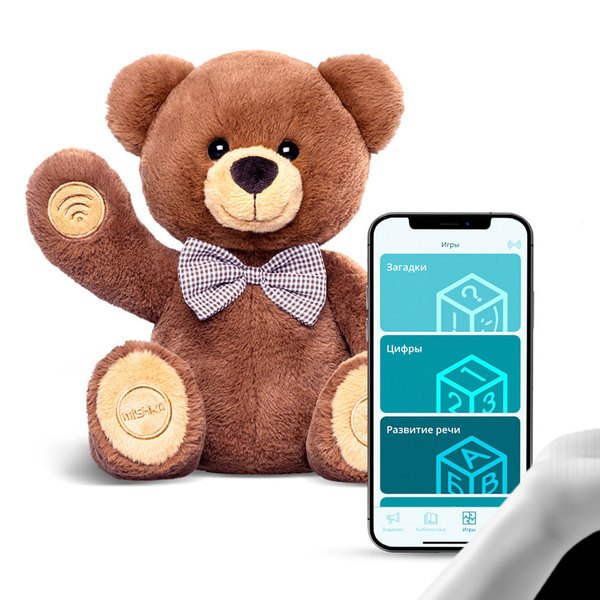 Mishka AI "Smart Bear"
Seems alive: A plush bear that tells a tale when its paw touches a sticker
Fate: Over 20,000 devices (company figure); sold in the US as Smart Teddy
Photo: Snob / Mishka AI, 2022 · quoted for review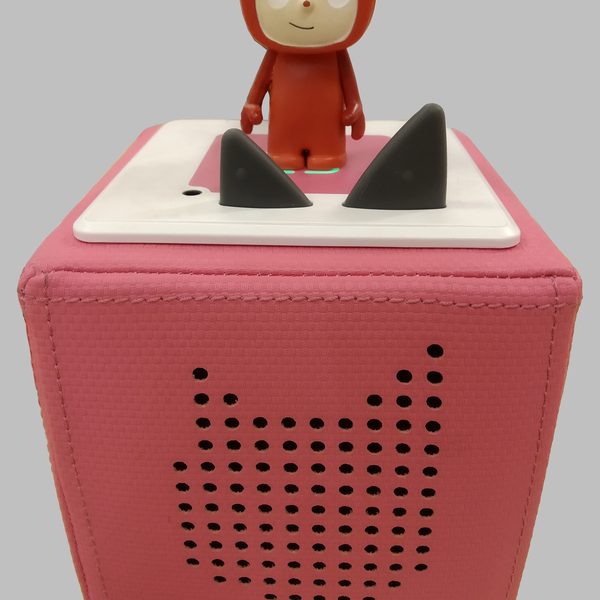 Toniebox
Seems alive: A figure on the lid is the hero
Fate: 10 m boxes by 09.2025; on sale
Photo: Johann56 · CC BY-SA 4.0, cropped
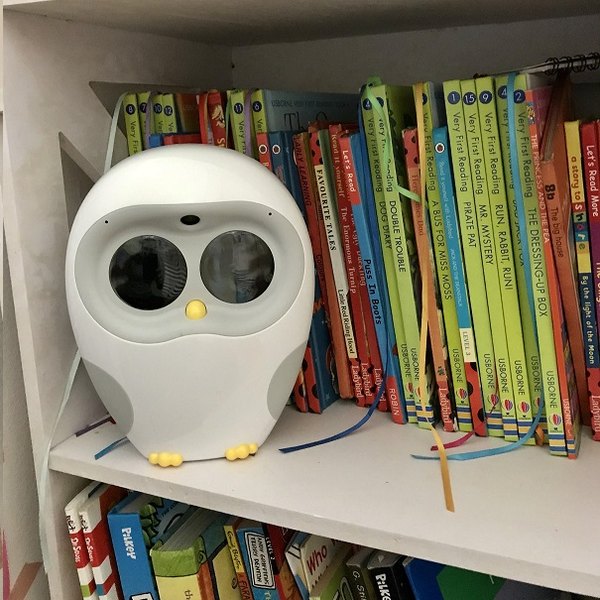 Luka
Seems alive: Reads each page as you turn it; says "I don't know this book yet" about the rest
Fate: Over 260,000 sold in 2018 (company figure) ◆; a new model still shown in 2024
Photo: Lah Lah Banana, 2020 · quoted for review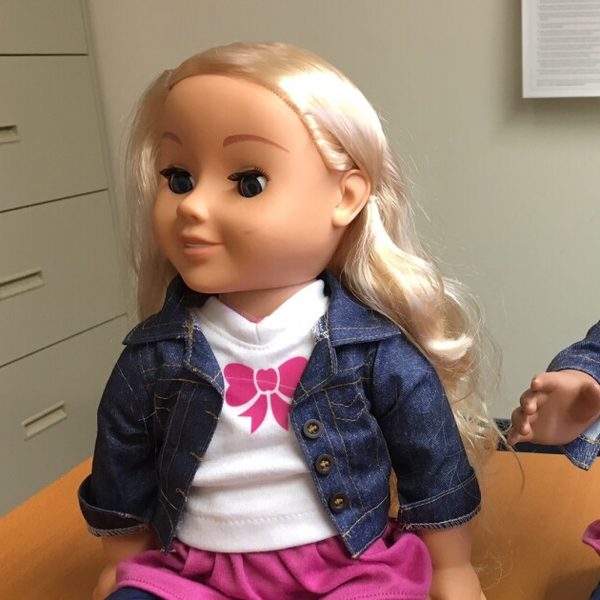 My Friend Cayla
Seems alive: Promises to keep a secret
Fate: Banned in Germany in 2017
Photo: NPR / KPBS, 2017 · quoted for review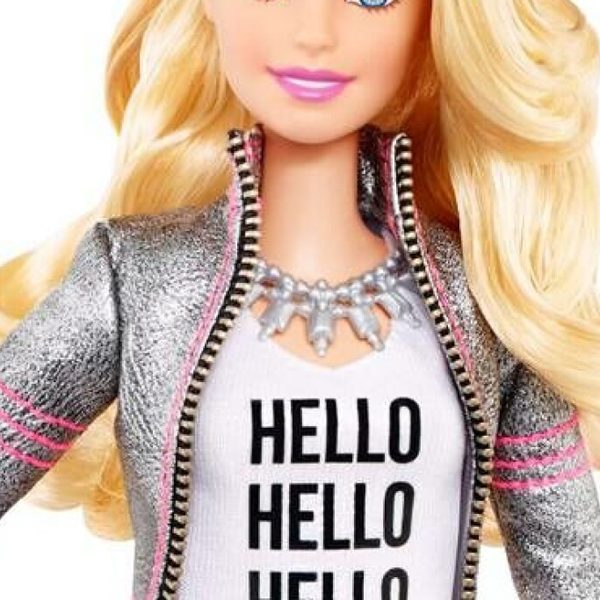 Hello Barbie
Seems alive: Remembers what the parents told it
Fate: Hacked in 2015–16; service stopped in 2019 ◆
Photo: © Mattel, via The Register · quoted for review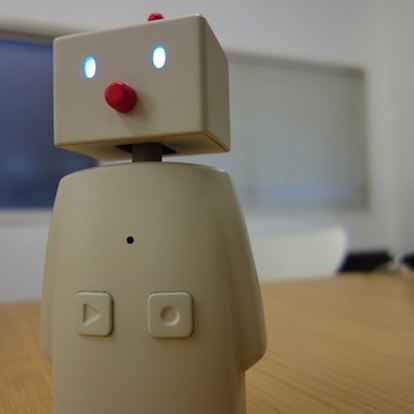 BOCCO
Seems alive: A family voice mailbox: the robot plays a message sent from a phone
Fate: Over 20,000 shipped since March 2021 (company); strongest in business projects
Photo: The Bridge, 2015 · quoted for review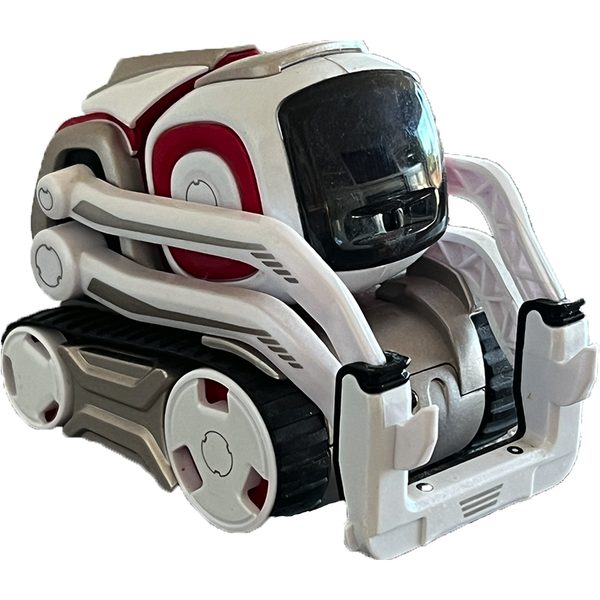 Cozmo / Vector
Seems alive: Eyes animated by film animators
Fate: Over 1.5 m robots; Anki closed in 2019; a buyer and the community kept them going
Photo: DecafPotato · CC BY-SA 4.0, cropped
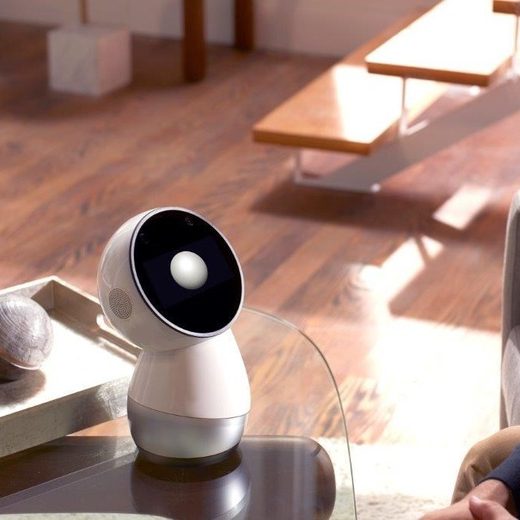 Jibo
Seems alive: Turns to whoever is speaking
Fate: Servers switched off in 2019
Photo: © Jibo, Inc., via Engadget · quoted for review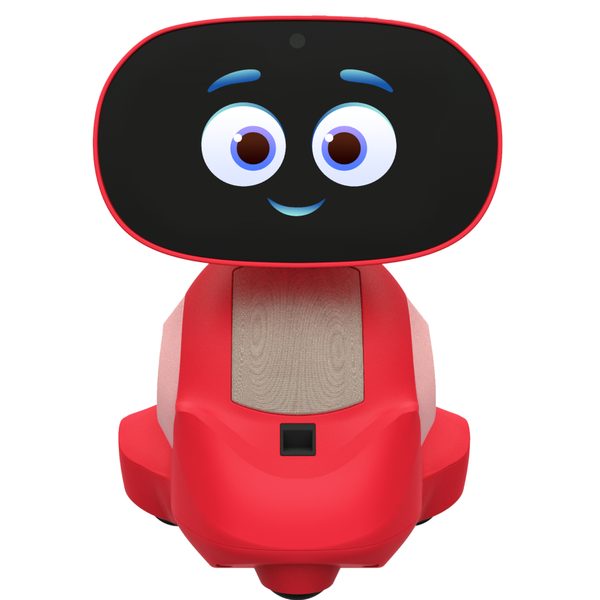 Miko
Seems alive: Starts the conversation; a face on the screen
Fate: Alive; an exposed database of its replies, a senators' inquiry in 02.2026
Photo: © Miko.ai · quoted for review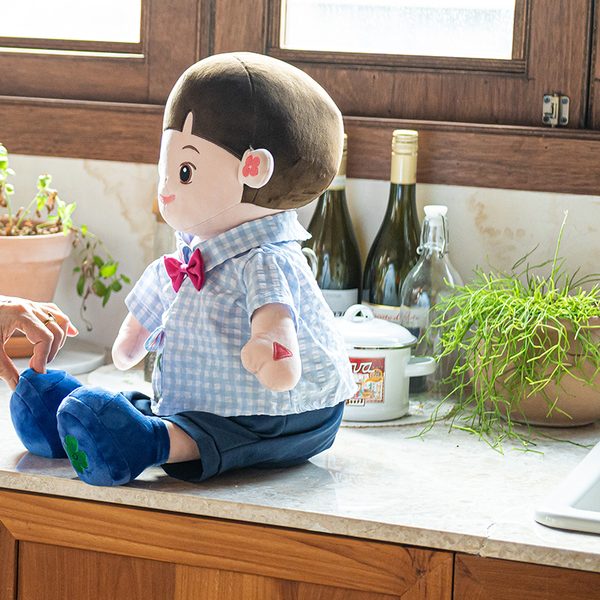 Hyodol
Seems alive: Fed and dressed like a grandchild; an alarm after a day without movement
Fate: Alive; over 12,000 — company figures
Photo: © Hyodol · quoted for review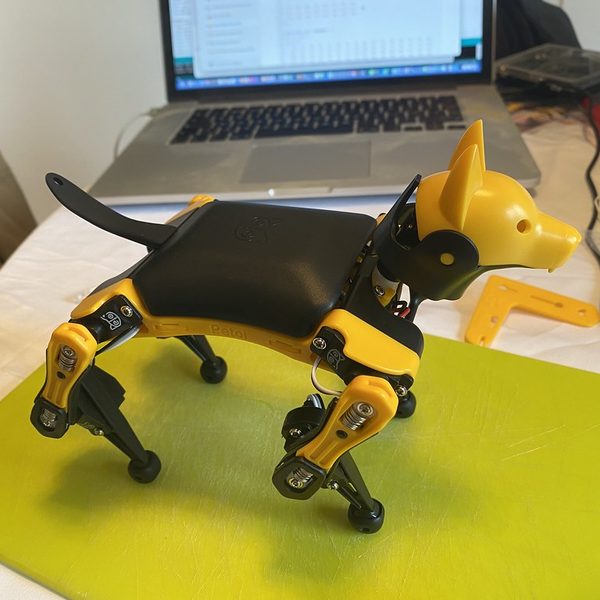 Petoi Bittle
Seems alive: Four legs, tricks
Fate: $567k on Kickstarter; on sale
Photo: epredator, Flickr · CC BY 2.0, cropped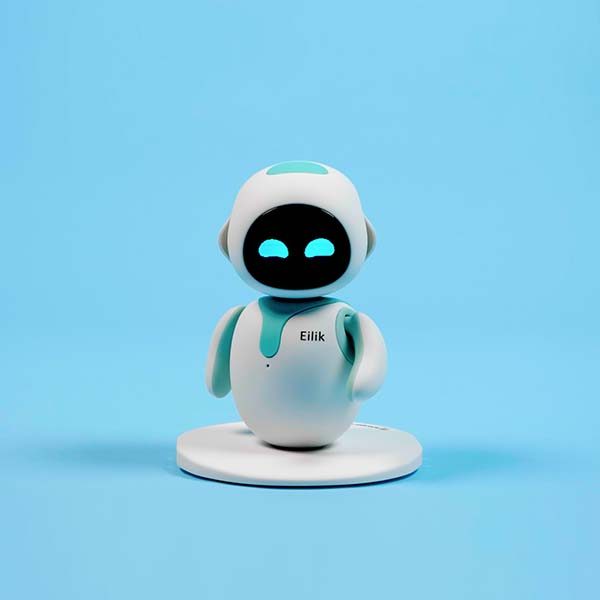 Eilik
Seems alive: Gets angry when ignored
Fate: 4,738 backers; on sale
Photo: © Energize Lab · quoted for review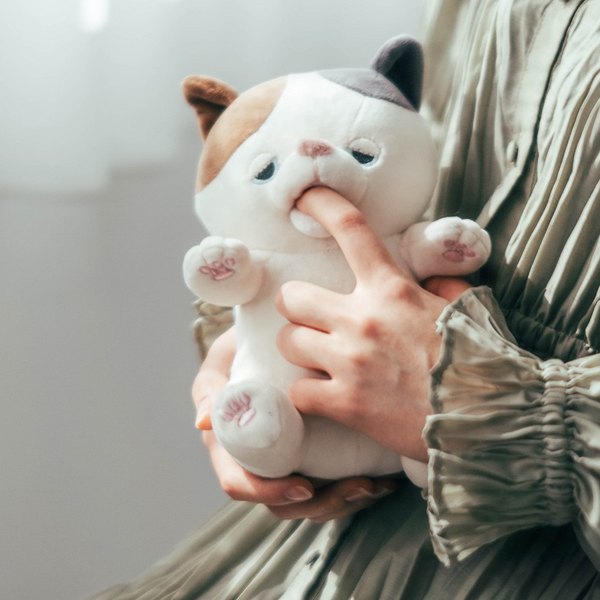 Amagami Ham Ham
Seems alive: Nibbles a finger, a little differently each time
Fate: First run of 20,000, Yukai's largest; crowdfunding record; still sold
Photo: Kaden Watch (Impress), 2022 · quoted for review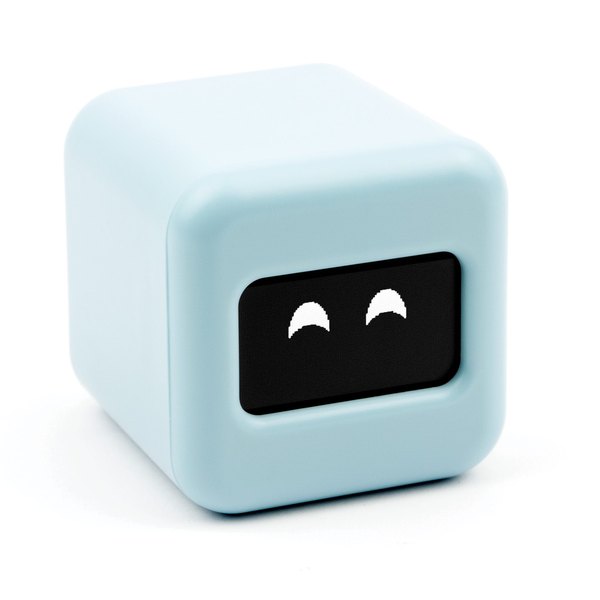 Ortomi
Seems alive: Seven moods and over forty expressions on a tiny screen; falls asleep, gets bored, gets angry
Fate: AU$148,582 from 937 backers; shipped on time; promised extras came 4 to 10 months later; on sale in 2026
Photo: Ortomi Robotics, product page, 2026 · quoted for review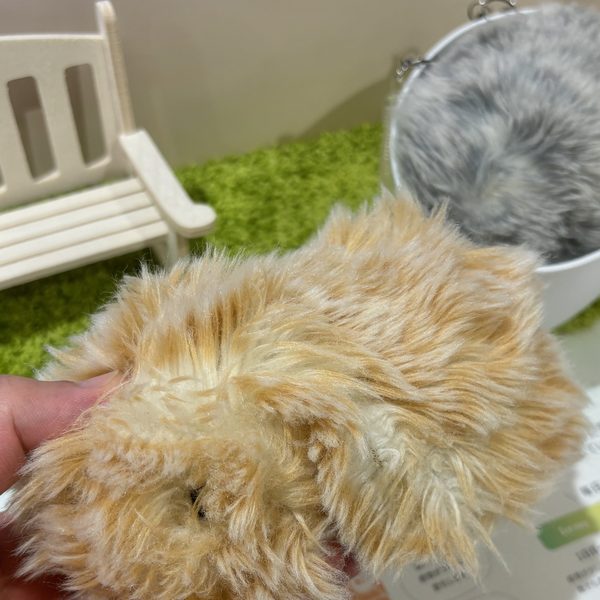 Moflin
Seems alive: Fur, a slow character, knows a voice
Fate: Over 7,000 by 03.2025 ◆; on sale
Photo: Kyu3a · CC BY-SA 4.0, cropped
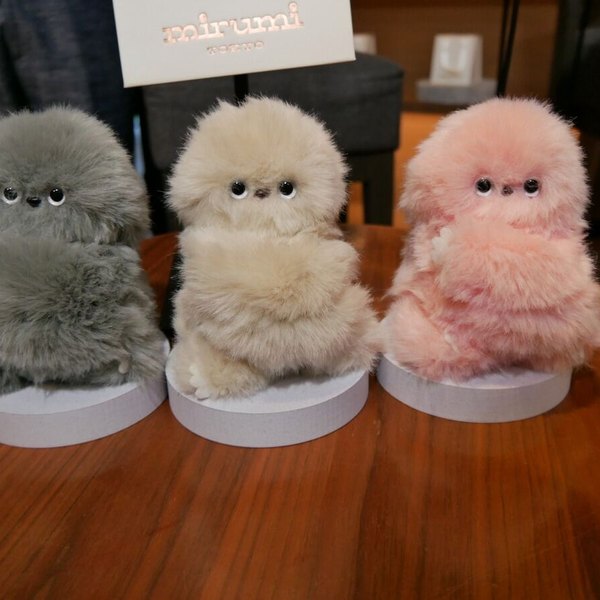 mirumi
Seems alive: A bag charm that glances at passers-by
Fate: Kickstarter about ¥74–80 million; on sale in Japan from April 2026
Photo: Mynavi News, 2026 · quoted for review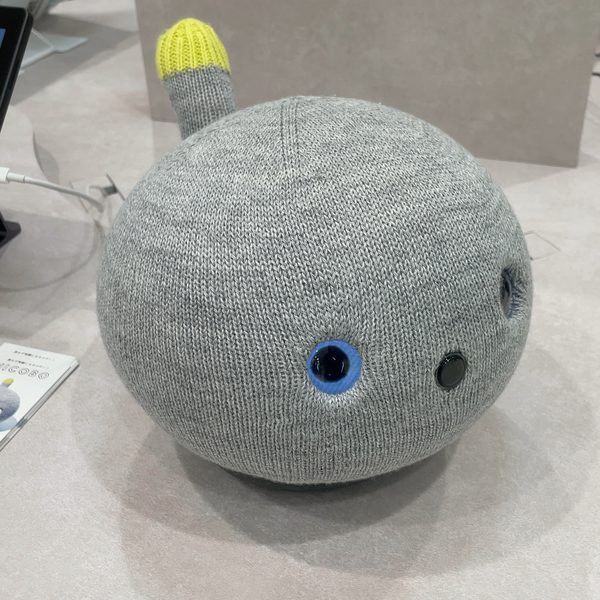 Nicobo
Seems alive: Deliberate weakness and babble; may not answer
Fate: Alive; over 10,000 by 03.2026 (Panasonic)
Photo: Kyu3a · CC BY-SA 4.0, cropped
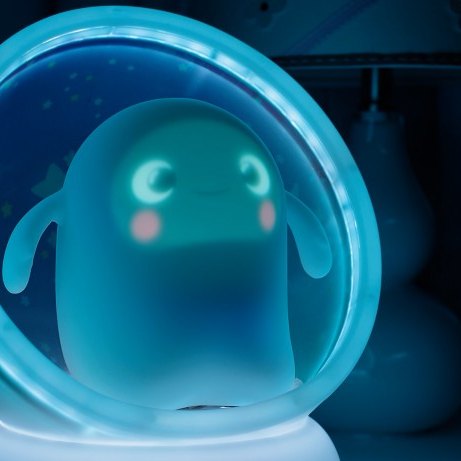 Snorble
Seems alive: A bedtime light with a glowing face, songs and routines for the child
Fate: Campaign in March 2021; shipped from December 2023 to May 2024; a chip library update froze sold units
Photo: Snorble via Entrevestor, 2021 · quoted for review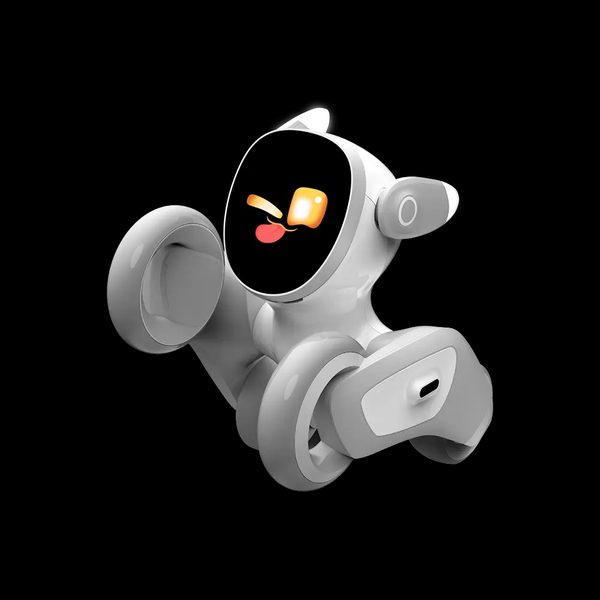 Loona
Seems alive: Smooth movement; catches a ball
Fate: About $4 m in crowdfunding; on sale
Photo: © KEYi Tech · quoted for review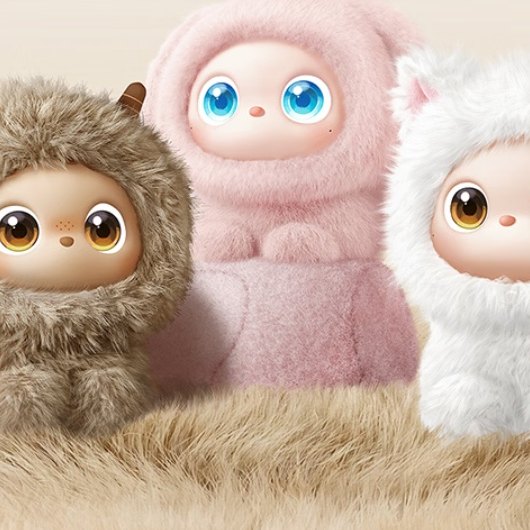 Nubia iMoochi
Seems alive: Its own sound language, recorded with voice actors
Fate: On sale in China since 17.07.2026; sales □
Photo: nubia (ZTE) via IT之家 · quoted for review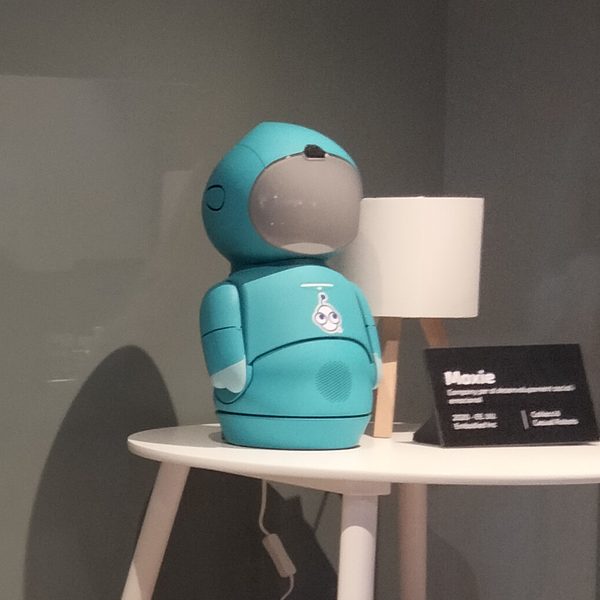 Moxie
Seems alive: A screen face, daily missions
Fate: Servers off 30.01.2025; former engineers released a local server
Photo: Enric, MNACTEC exhibition · CC BY-SA 4.0, cropped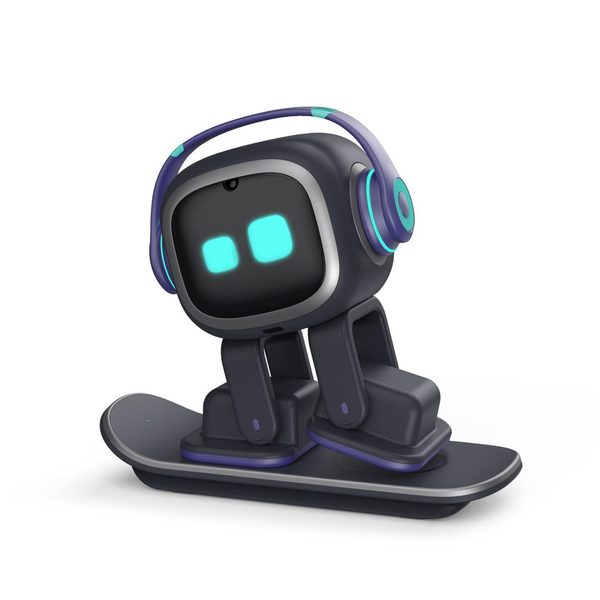 EMO
Seems alive: Wanders the desk and doesn't fall off
Fate: $348k on Kickstarter; on sale
Photo: © Living AI · quoted for review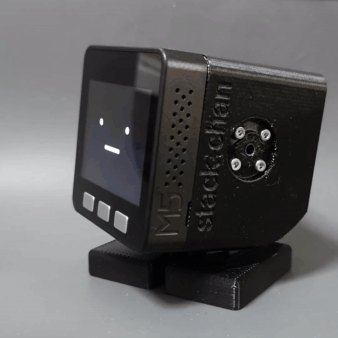 StackChan
Seems alive: A face on a screen; blushes when you stroke its head
Fate: 4,141 Kickstarter backers, delivered in 05.2026; on sale
Photo: stack-chan/stack-chan on GitHub · Apache 2.0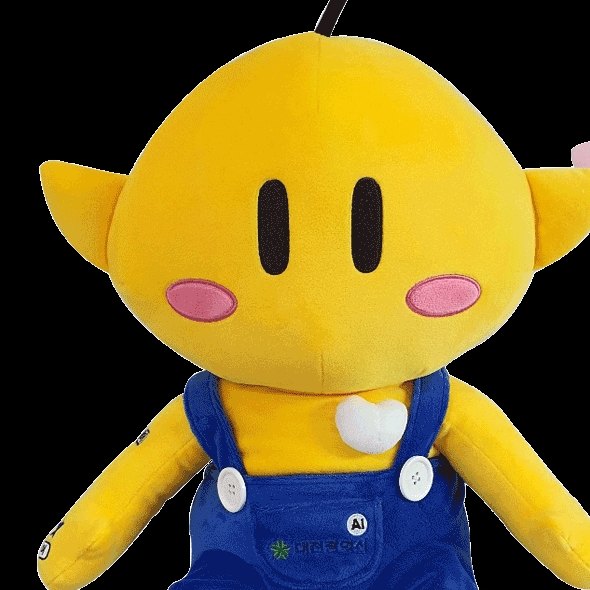 Kumdori AI doll
Seems alive: Chats with older people who live alone and listens for words of danger
Fate: 500 units in 2022, 1,000 in 2025; one alarm case in August 2025 (press)
Photo: Venturesquare / Mr. Mind, 2025 · quoted for review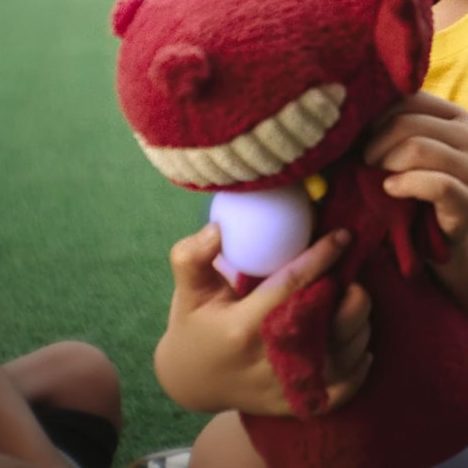 BubblePal
Seems alive: A voice for a toy the child already loves
Fate: Over 200,000 ◆; on sale
Photo: © Haivivi, via MIT Technology Review · quoted for review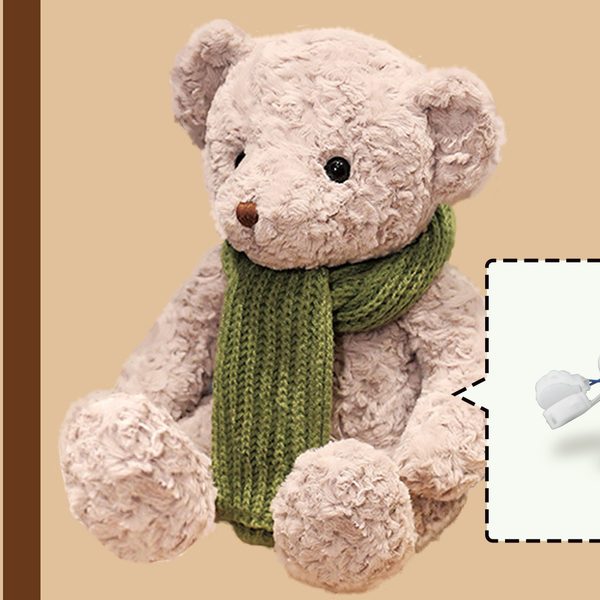 FoloToy Kumma
Seems alive: A parent's voice
Fate: PIRG report in 11.2025; back on sale
Photo: © FoloToy · quoted for review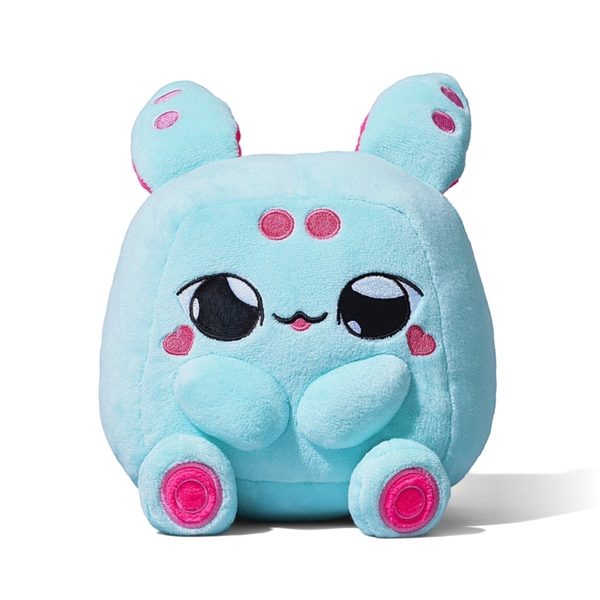 Grem
Seems alive: A soft body with the brain in a back pocket
Fate: On sale
Photo: © Curio Interactive · quoted for review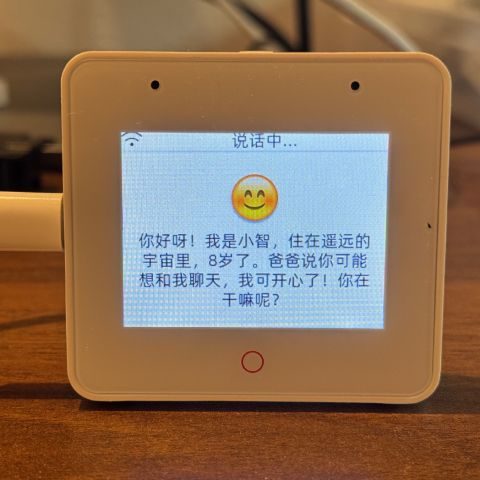 xiaozhi-esp32
Seems alive: An emoji face and a name of its own
Fate: 31k stars on GitHub; still updated
Photo: 78/xiaozhi-esp32 on GitHub · MIT licenceWhat shows when you put them side by side
Roots
Ideas and experiments that the toys repeat in one way or another.
A cart, two light sensors, two motors. Wires crossed: it rushes at the light. Wires straight: it turns away. There is no thought inside, but an observer sees character.
Robots with no processor: a few transistors wired as nerves, often a solar cell. They crawl towards light and "search". Tilden later designed Robosapien (2004).
No model of the world: layers of simple behaviours — don't bump, wander, head for a goal. A higher layer overrides a lower one. Brooks co-founded iRobot, the maker of Roomba.
A robot head with a face and babble: speech-like sounds without words. People talked to it like a baby. Breazeal later founded Jibo.
Stanford experiments: people are polite to computers, take offence at them and flatter them, even knowing they are machines.
The more a robot looks like a person, the more likeable it is, up to a point. An almost-human feels creepy.
61 cards
Each card: body, brain, relationship, illusion of life, fate, and what it means for a simple toy with a small neural network on its own chip. A full card goes to a toy that teaches something new for such a toy; 89 more are in the census below. Roomba (a vacuum cleaner) and Toniebox (an audio player) stay for their tricks. Unmarked facts come from the open sources listed under each card and were not checked independently. ◆ inference or a weak source · Σ counted by us · □ not found.
Pet Rock1975 · Gary Dahl, an ad man (USA) · $3.95alive
- Body
- Senses nothing and responds with nothing. A stone in a cardboard carrier box with air holes and wood shavings.
- Brain
- No electronics. The "intelligence" is a care and training manual; the most popular trick is "play dead".
- Relationship
- Presence and a joke; a gift for adults ◆.
- Illusion of life
- Pet-shop packaging. A manual written with a straight face. Tricks where doing nothing counts as success. The owner supplies the name and the care ◆.
- Fate
- Shown in August 1975. 1.3–1.5 million sold in a few months; cost under a cent, 95 cents profit per rock. The fad was over after Christmas 1975. Super Impulse bought the rights in 2022; a licensed A24 version came out in 2023.
- For a toy on a chip
- The idea of a pet was tested on people without a single chip, with packaging and text. The joke lasted months; a chip has to add what a rock lacks: a response to what the child does.
Sources: Pet Rock — Wikipedia · Hard Sell: A History of the Pet Rock — Mental Floss · Pet Rock — The Strong National Museum of Play
2-XL1978 / 1992 · Mego (USA); Tiger Electronics from 1992 (USA) · $50–80; tapes $7.95–9.95 eachsilent
- Body
- About a foot (30 cm) tall, with a tape player inside: an 8-track cartridge in 1978, a cassette in the 1992 Tiger version. It senses only four red buttons on the belly: Question, A (yes, true), B (more info), C (no, false). No microphone is mentioned ◆. It answers with a voice from the tape; the eyes and a red dome flash while it plays. A mains adapter and one tape, "General Information", come in the box.
- Brain
- Inside, no network. The logic is on the tape. A button press makes the player jump to another track, so the answer seems to follow the question. A Tiger cassette has four tracks (left and right on each side) and the head reads the one that matches the button. How the toy keeps its place on the tape □. No neural network Σ. The voice belongs to the inventor, Michael Freeman; for Mego it went through a synthesizer.
- Relationship
- A quiz teacher. The toy asks, the child presses A, B or C. A right answer gets praise and sometimes a harder question; a wrong one gets a scolding. Adventure tapes let the child decide what happens to the characters. Mego made 43 tapes Σ (US history, astronomy, math, sports and others). Tiger made about 45, with licences such as Batman and Jurassic Park.
- Illusion of life
- It answers in its own voice: a scolding, praise, a joke. Questions get harder after right answers. The child's choice changes the story. The robot voice and the flashing eyes do the rest. The answer is a pressed button, so the toy cannot mishear Σ.
- Fate
- The inventor patented it in 1976; Mego launched it in 1978. Over 200,000 by summer 1979 (a magazine; source of the figure □). Mego dropped it in 1981, or in 1982 after its bankruptcy; sources differ. Tiger relaunched it in 1992 with cassettes and made it until 1995 or 1996. FamilyFun named it best toy of 1992. Tiger sales □.
- For a toy on a chip
- A dialogue needs neither speech recognition nor a neural network. The child answers with one of four buttons and the toy jumps to another recorded clip. The whole conversation is a graph written in advance. On a chip it is a table of "node and button give the next node" plus clips in flash. There are no hearing errors, and only recorded lines can be said, so every node must be checked before release. The cost is the author's work: Mego needed dozens of tapes. A small network can sit on top, for example to pick the next node by how fast the child answered ◆.
Sources: 2-XL — Wikipedia · Remembering the First Smart Toy: 2-XL — Mental Floss · 2-XL Robot from Mego (1978) — ToyTales
Teddy Ruxpin1985 · Worlds of Wonder (USA) · $59–79alive
- Body
- The sources name no sensors □. Responds with speech from a speaker and with eyes and mouth: three servos in early models, then two, then one. Comes with books.
- Brain
- No brain. A stereo cassette: one track carries the sound, the other carries the signals that move the face. Everything is recorded in advance; the bear hears nothing.
- Relationship
- Storytelling: the bear "reads" aloud ◆. About 60 book-and-tape titles at $12.95; a 65-episode cartoon in 1987.
- Illusion of life
- Mouth and eyes move in time with the speech. Yawns and giggles while reading. Its creator, Ken Forsse, had built animatronics for Disney.
- Fate
- 41,000 units in the first 30 days, $93 m in sales in the first year, over 8 million in all. Worlds of Wonder went bankrupt in 1987–1988. Then licences: Hasbro, Yes! Entertainment, BackPack Toys, Wicked Cool Toys (2017, stories in an app). A film with Amazon MGM was in the works as of 2025.
- For a toy on a chip
- Voice and face in sync and good voice acting made it seem alive. The story medium changed four times in 30 years: tape, cartridges, digital cartridges, app. Stories stored on the chip outlive the medium.
Sources: Teddy Ruxpin — Wikipedia · A Bear Necessity — Mental Floss
A.G. Bear1985 · Axlon, Nolan Bushnell's company (USA) · about $30–39silent
- Body
- Senses with a microphone. Answers through a speaker in "bear talk", a mumble with no words. A soft body with no hard shell, unlike Teddy Ruxpin with a tape deck inside; the voice box sits behind a zipper. The mouth of the basic model does not seem to move: moving mouths are mentioned only for GranPa and GranMa ◆.
- Brain
- Inside, no network. The "Growl-Back" circuit takes the speaker's voice pattern, puts its own inflection on it and mumbles it back (Ron Miller, Applied Design Laboratories). It does not recognise words. Three breadboard versions on discrete parts; a month from prototype to contract. The chip cost about $500,000 to develop, Bushnell said. No neural network; most likely it follows the loudness envelope of the voice ◆.
- Relationship
- A plush friend that answers: the child talks, the bear mumbles back. Two bears mimic each other ◆.
- Illusion of life
- The reply repeats the shape of what was said — its length and intonation — so the bear seems to have understood. Soft enough to hug. With no words, it cannot say the wrong thing Σ.
- Fate
- Shipped from July 1985. About 600,000 by 24 December 1985, with $12–15 m expected for the year (company figures). The line grew: Bearonica, Baby, GranPa and GranMa. Axlon was sold to Hasbro and production stopped; one source says Hasbro brought the bear back briefly in the mid-1990s, Wikipedia mentions a limited run in the late 1990s ◆.
- For a toy on a chip
- A voice reply needs neither speech recognition nor speech synthesis. It is enough to hear that someone is talking, take the length and intonation of the phrase, and answer with a mumble of the same shape. In 1985 this worked on discrete parts and sold 600,000 in five months. On a chip, a small network only has to tell speech from household noise; there is nothing forbidden it could say.
Sources: A tale of two bears — The Christian Science Monitor, 1985 · AG Bear — Wikipedia · The story of Axlon — Vintage Arcade Gal
Teen Talk Barbie1992 · Mattel (USA) · About $25 (one source; another says $40–50)silent
- Body
- A Barbie doll with a voice unit. A press of the button gives one of four phrases. Where the button sits □. The only sensor is that button. The box says "I really talk!". Versions with brown, blonde and red hair, and an African American version.
- Brain
- Inside, no network; recorded phrases. A "voice chip" per one magazine ◆; its type □. There are 270 phrases in all; four are fixed into each doll at the factory. Mattel says it wrote them from a survey of what children wanted Barbie to say. Examples: "Will we ever have enough clothes?", "Let's plan our dream wedding!", "Math class is tough!". Combinations matter too: the number of possible sets is about 216 million Σ.
- Relationship
- A teenage friend doll that talks about school, friends, the mall and a wedding. Each doll has its own four phrases. Two dolls rarely share a set, so a doll seems to have a character of its own Σ.
- Illusion of life
- A random four out of 270 gives each doll its own repertoire. The topics are a teenager's: clothes, school, dates. The voice answers a press, not what the child said Σ.
- Fate
- About 350,000 produced. The "math" line is one of 270, so a given doll had a 4 in 270 chance of it, about 1.5% Σ. In October 1992 a university women's association demanded a recall. Mattel refused to drop the phrase at first and offered a mute doll in exchange; new models stayed silent on math. In 1993 an activist group swapped voice boxes between these dolls and talking G.I. Joe figures. The line afterwards □.
- For a toy on a chip
- A closed set of phrases can still say the wrong thing. One line out of 270 started a national dispute: harmless alone, it told girls something about themselves. With 270 lines and four per doll there are about 216 million sets Σ, so sets cannot be checked one by one. Check every line and every banned pair before release. After sale Mattel could only swap the doll for a mute one. A chip toy with a closed set needs three things. One is a table of lines with notes on what each says to a child. Another is a list of banned pairs. The third is a way to switch a line off.
Sources: Barbie's word problems — Education Week, 1992 · Teen Talk Barbie — Wikipedia · Teen Talk Barbie Doll — Science Museum Group
Toby Terrier1993 · Tiger Electronics (USA) · price not foundsilent
- Body
- A sensor in the collar watches the TV picture; one button. Responds by nodding, wagging its tail, barking and saying phrases. No screen.
- Brain
- On the device, no network. The script comes from the tape: special videos hide a data stream in the brightness of the picture (VEIL), and the dog plays matching lines from its memory. Microcontroller □; no neural network ◆.
- Relationship
- A dog that watches tapes together with the child, ages 3–7.
- Illusion of life
- The line comes at the moment of the scene. The body answers: nod, bark, tail. Without the right tape it stays silent.
- Fate
- Sales and end of production □. VEIL was later used in Mattel's Batman toys (2004) and proposed for copy protection (2005).
- For a toy on a chip
- Behaviour can live in the content the toy watches: the chip only receives a tag and plays a line. A relative of Teddy Ruxpin's control track; the new part is the shared screen — the toy watches together with the child. Without its own content it is silent.
Sources: Toby Terrier — Wikipedia · VEIL — Wikipedia · Toby Terrier 1993 — rePLAYcements · Meet Toby Terrier — Internet Archive · VEIL in Mattel toys — Machine Design, 2004
Tamagotchi1996 · Bandai · ¥1,980alive
- Body
- Three buttons, no sensors. A 32×16-dot black-and-white screen and a beeper. An egg 53 mm tall on two LR44 cells.
- Brain
- Entirely on the device, no network: an Epson E0C6S46 microcontroller. A table of rules and timers: hunger, happiness and training meters, illness, death from neglect or old age. No neural network.
- Relationship
- Caring. Children and teenagers in the 1990s; according to the company (2020), about 40% of buyers are adults.
- Illusion of life
- Beeps when it needs something. No pause: about 12 days from egg to adult. Death is final; children held funerals.
- Fate
- 400,000 in 1996, 10 m by July 1997, about 40 m by spring 1998. In 1999 Bandai wrote off 2.5 m unsold units. Came back in 2004, 2017 and 2023 (with Wi-Fi). 98.1 m by 2025; the brand is alive.
- For a toy on a chip
- Attachment came from a schedule, irreversibility and requests for attention. A small network first needs the same simple frame of needs; better reactions come later.
Sources: Tamagotchi — Wikipedia · Tamagotchi guide — JapanToPlay · Tamagotchi — The Strong National Museum of Play · たまごっち — Wikipedia (ja) · TamaLIB — GitHub
Tickle Me Elmo1996 · Tyco Preschool, a division of Tyco Toys (USA) · $28.99–29.95 (sources differ)silent
- Body
- A plush Elmo from Sesame Street, for ages 1½ and up. It senses a press on the tummy; the box says "Try Me! Press Tummy". The sensor type □. It answers with laughter from a speaker and a motor that shakes the body. The motor was tuned to speed up gradually and then run full. A battery is included. In shops a reduced demo mode ran; at home a cord pull switched on the full one.
- Brain
- Inside, no network ◆. A circuit-board program by engineer Mark Johnson-Williams runs the sound and the motor. One squeeze gives a giggle; three squeezes give shaking and vibration. By the makers' account the laugh grows with each squeeze and at the third the toy goes hysterical. Whether the count resets after a pause □. Chip □.
- Relationship
- The child tickles the toy and the toy laughs. A television wave followed: Rosie O'Donnell showed it in autumn 1996, and demand ran far ahead of supply. The inventors' earlier toy was Tickles the Chimp; the Elmo version came after Tyco got the Sesame Street licence.
- Illusion of life
- The reply has a beginning, a middle and an end. The payoff comes within eight seconds, because the designer judged attention to be shorter. Shaking was added because television needs motion; it happens only during the laugh. The line "Stop, stop tickling me" was cut because it sounded sinister from a child character.
- Fate
- Launched in July 1996: 400,000 at the start and 600,000 more ordered; a million sold out by the end of December. Tyco staff say "well over a million" in 1996 and 4 million in 1997 (company figures). Resale reached $1,500. Mattel bought Tyco. Later came TMX (2006). The 1996 toy is no longer sold ◆.
- For a toy on a chip
- The reply grows with repeats. One counter of squeezes over a few seconds gives three steps: a giggle, a laugh, then shaking laughter. The answer gets a beginning, a middle and an end, and no network is needed. On a chip it is a pressure sensor, a counter that decays and a vibration motor that ramps up. Put the payoff within eight seconds. A small network could tell a tickle from a hit or a drop ◆. Check lines for how they sound from a child character.
Sources: Tickle Me Elmo — Wikipedia · Oral history: Tickle Me Elmo turns 20 — Mental Floss, 2016 · Tickle Me Elmo — The Strong National Museum of Play, 2025
Cabbage Patch Snacktime Kids1996 · Mattel (USA) · Price □; refund $40 including shippingsilent
- Body
- A Cabbage Patch doll with a motorised mouth. The child puts plastic food in the mouth, the mouth chews and the food drops into a backpack. Behind the lips sits a pair of one-way smooth metal rollers. It runs on batteries and has no on-off switch. Unsnapping the backpack stops the chewing. What detects the food □.
- Brain
- Minimal electronics: the inserted food starts the chewing. No logic and no network Σ. The descriptions mention no overload sensor and no reverse. One weak source says the motors cannot stop or reverse while something is stuck ◆.
- Relationship
- The child feeds the doll again and again, because the food comes back out of the backpack. It is a doll of the Cabbage Patch Kids line; Mattel held the licence from 1994.
- Illusion of life
- The doll eats and chews in a realistic way. The food returns and feeding never ends. The sources describe no other reactions Σ.
- Fate
- A hit of Christmas 1996. On 27 December 1996 a 7-year-old's hair was pulled to the scalp; freeing it took 30 minutes and over 20 screws. On 31 December the US safety commission warned: about 700,000 dolls since August, 35 cases, no serious injuries. On 6 January 1997 Mattel offered $40 refunds on about 500,000 sold, pulled the doll from shelves and ended production. About 100 reports in all (AP).
- For a toy on a chip
- Body safety. In the other cards the risks are data, voice and words; here the toy was pulled because of a motor. The mouth rollers caught children's hair and fingers, there was no switch, and only the backpack stopped the chewing. Cases were rare, yet the refund came six days after the warning Σ. A toy with a chip needs moving parts with no pinch points and a limited motor torque. Motor overload can be caught as a current spike and answered with a stop and a reverse ◆. Give the child a stop that works, and test with long hair. A network changes nothing here; the hardware sets the safety.
Sources: Refund programme, release 97-055 — CPSC, 1997 · Warning 97-041 — CPSC, 1996 · Mattel bites the bullet — AP, Deseret News, 1997
Digital Monster1997 · Bandai × WiZ · price not foundalive
- Body
- Three buttons; metal contacts to connect to another toy. A monochrome LCD with eight icons around it, a beeper. 56×41×28 mm, two LR44 cells.
- Brain
- On the device, no network: a 4-bit microcontroller ◆. Counters and timers: hunger, strength, weight, a "care mistake" if a call goes unanswered for 20 minutes, win rate. The evolution branch depends on the number of care mistakes. No neural network ◆.
- Relationship
- Care, training and battles with another owner's pet; for boys 8 and up.
- Illusion of life
- A "call" icon lights up when it needs something. Real time: eight hours of sleep restore strength. Battles through contacts; injury is possible even after a win.
- Fate
- Japan, June 1997; North America, December 1997. Over 8 million worldwide (Bandai, 2017) or 14 million by 2004 (Anime News Network). The brand is alive: the Pendulum series, reissues in 2017 and 2020.
- For a toy on a chip
- Built like Tamagotchi. The new part: care turns into "my pet is stronger than yours"; two toys meet without a network, and the creature's shape reads as a record of how it was cared for. For an ESP32: toy-to-toy contact without a router or cloud.
Sources: Digital Monster — Wikipedia · デジタルモンスター — Wikipedia (ja) · Digital Monster Ver.1 review — ASCII.jp · Bandai press release, 2017 · V-Pet board — withthewill.net · Digital Monster Ver. 1 — Wikimon
Furby1998 · Tiger Electronics (Hasbro since 2005) · about $35alive
- Body
- An infrared port between the eyes to talk to other Furbies; touch, tilt and light sensors in early models (the exact list for the 1998 model is unclear ◆). Responds with a speaker and one motor that moves the eyes, mouth and ears.
- Brain
- On the device: a Sunplus SPC81A microcontroller with 128 bytes of RAM. A script: it starts in made-up "Furbish" and uses more English words over time. The "learning" is written into the program in advance.
- Relationship
- Play and presence: talks, sings, "grows up". Children.
- Illusion of life
- A language of its own. "Growing up" on a timer. No off switch: it goes quiet only when the batteries come out. Furbies talk to each other over infrared.
- Fate
- 1.8 m in 1998, 14 m in 1999; over 58 m according to Hasbro. In 1999 the NSA banned Furby from its premises for fear it would record secrets; the maker denied it recorded anything. New versions in 2005, 2012, 2013, 2016 and 2023. The brand is alive.
- For a toy on a chip
- A cult toy ran on 128 bytes, and its "learning" was a timer. On a chip the main work is planning how the character changes over time; recognition can stay simple.
Sources: Furby — Wikipedia · Furby — Robots Guide · A brief history of Furby — FOX 6 · Furby — Computer History Museum
Pocket Pikachu1998 · Nintendo · ¥2,500 / $19.95silent
- Body
- Counts steps with a mechanical switch, not an accelerometer: lying flat it counts nothing, so it has to hang upright on a belt. Feels shaking. Monochrome LCD and sound; 40 g, one CR2032.
- Brain
- On the device, no network. A clock, step counters and a schedule: steps turn into "watts", friendship has levels, sleep from 8 pm to 8 am, new gestures at 25,000, 50,000 and 300,000 steps. No neural network ◆.
- Relationship
- A walking companion on the belt; no feeding or cleaning.
- Illusion of life
- Where Pikachu stands on the screen shows friendship: turned away, looking for you, smiling at the edge. Wake him and friendship drops. Ignored, he disappears; a few dozen shakes bring him back.
- Fate
- Over 2.5 million in the first 30 days in Japan (German Wikipedia citing SFGate, not opened ◆). Followed by a colour version with an infrared link to the games (1999) and Pokéwalker (2009).
- For a toy on a chip
- New compared with Tamagotchi: the pet's food is the owner's own movement; no chores, but attention is measured; neglect can be undone. The cheapest sensor created its own ritual — wearing it upright on a belt. A natural place for a small network on a chip: an accelerometer telling walking, running, shaking and lying still apart.
Sources: Pokémon Pikachu — Wikipedia · ポケットピカチュウ — Wikipedia (ja) · Pokémon Pikachu — Wikipedia (de) · Pokémon Pikachu — Serebii · Iwata Asks: Walk with Me — Nintendo
Baby Annabell1998 · Zapf Creation (Rödental, Germany) · Price □alive
- Body
- In 1998 a "function doll" with electronics that smacks its lips and sobs loudly. A soft body with a battery box; the first version had no electronics in the head. Head electronics came with the Interactive version in 2002. From 2005 a water tank let it drink and cry tears; the 2007 model also turns its head. The sensor it listens with □.
- Brain
- Inside, no network ◆; chip □. Wikipedia says "older versions" recognised sounds such as a rattle or the owner's voice. They cried at noise while asleep. It cites two German newspaper articles of 2003 that were not opened ◆. Whether this applies to the 1998 doll □. How it tells a rattle from a voice □.
- Relationship
- A baby doll to look after: feed it, put it to sleep, calm it. Calming with a rattle ◆. There is a line of clothes and furniture.
- Illusion of life
- Sleep and waking: asleep, it reacts to noise by crying ◆. It knows "its" rattle and a voice ◆. It smacks its lips and sobs. Since 2005 it drinks water and cries tears.
- Fate
- Launched in 1998. A top toy of the year in 1999, 2000, 2001, 2005 and 2007 (V&A). Together with Baby Born it gives about 90% of Zapf's sales. Zapf listed on the stock exchange in April 1999, merged with MGA by 2024 and is now MGA Zapf Creation. A 2018 anniversary edition had 75,000 units in the shops. Annabell sales alone □.
- For a toy on a chip
- Household sounds and a sleep state. The reaction depends on the class of sound (rattle, voice, noise) and on the doll's state (awake, asleep): noise during sleep makes it cry ◆. That is a 3×2 table with no vocabulary. Micro Pet listens to the length of sounds and Tomodachi Pikachu to the tone of speech. Here a small network on a chip would classify sounds in the house ◆. A sleep state removes needless reactions to TV and chatter. Caveat: for the 1998 doll this is ◆. It is only certain that the 2003 press described this for "older versions".
Sources: Zapf Creation — Wikipedia · Company and history — baby-born.com · Baby Annabell — V&A
AIBO1999 / 2018 · Sony · ¥250,000 / ¥198,000 + subscriptionalive
- Body
- 1999: touch, camera, rangefinder, microphone, accelerometer. aibo 2018: two cameras, four microphones, touch sensors on the head, chin and back, 22 axes of movement, two OLED screens for eyes.
- Brain
- 1999: on the device — a 64-bit 50 MHz processor, software on a Memory Stick, over 100 voice commands. 2018: a Snapdragon 820 on board plus the cloud; it needs a subscription and a constant connection.
- Relationship
- Presence and play, then care: a pet dog. Adults and high-income families ◆.
- Illusion of life
- Behaviour "complex and unexpected enough that people don't lose interest" — the goal of its developer, Masahiro Fujita. Adapts to its owner and learns tricks. Since 2018 it recognises up to 100 faces.
- Fate
- First batch of 5,000; the 3,000 for Japan sold out in 20 minutes. About 150,000 before the line closed in 2006. In 2014 Sony stopped repairs; owners in Japan held funerals for their dogs. The new aibo has been sold in Japan since 2018: 11,111 units in the first quarter.
- For a toy on a chip
- Its liveliness rested on dozens of axes and sensors at the price of a used car, and the cloud brought a subscription and dependence on the maker. A simple toy needs a self-contained chip and no subscription.
Sources: AIBO — Wikipedia · Aibo (1999) — Robots Guide · Sony sells thousands of Aibo robot dogs — Fox News · Sony announces return of Aibo — Android Police
Primopuel1999 · Bandai and WiZ (Japan) · ¥7,329 with taxsilent
- Body
- A soft plush baby, about 30 cm sitting. Seven sensors and switches: forehead, right ear, left cheek, hug, two palms and tail. It answers with a voice and songs. Moving parts are not mentioned □. The 2013 model weighs 700 g, takes four C batteries and is rated 12+. Power of the first model □.
- Brain
- Inside; no network is mentioned for the first model. Bandai dates voice recognition to the 2004 model, so the first one probably answered touch only ◆. About 250 words in the first model, 380 phrases by 2006, over 2,000 from 2009. Character depends on which places are touched and how often. It has a clock and calendar: seasonal phrases, time of day, even a cold. The 2013 model added an SD card with new phrases and infrared contact between two dolls. Chip □; no neural network ◆.
- Relationship
- A companion for adult women. Bandai aimed at women of 20–30; the core became housewives of 40–50 whose children had grown up. Word of mouth spread it. Owners name the doll, sew clothes for it and take it to events. One reader, 84 and living alone, calls her doll by a pet name. A woman of about 50 moved from AIBO to Primopuel because AIBO needed many commands and wandered off.
- Illusion of life
- It answers touch in seven places. It is glad when noticed and sulks when ignored. It lives by clock and calendar and can catch a cold. It gets used to repeats: model B protests less if the same spot is touched again and again. Around the doll grew rituals: clothes, a "kindergarten" with an entry form, parties and a repair "hospital". The first model does not recognise speech, so it cannot answer off-topic to what was said ◆.
- Fate
- Launched November 1999. Over 1 million shipped in five years across all versions (Bandai); the rounded figure was the same in 2009 and 2013 Σ. Six versions followed, the last in 2013. The repair "hospital" opened in August 2003: phone, post, flat fee of ¥500 for a sensor, 7–10 days. It closed on 30 June 2018 for all models. Kindergarten, fan club and website closed in 2016–2019. The series page on Bandai's toy site is gone; the date of withdrawal from sale □.
- For a toy on a chip
- An adult buyer paid for it herself, and about 250 words were enough. Other adult companions in the atlas are either expensive or paid for by an institution. Primopuel sat on an ordinary shelf and spread by word of mouth. It needed seven touch spots, a clock with a calendar and a character that depends on handling. On a chip that is seven touch inputs (an ESP32 has 10, an S3 has 14 ◆). Add a table of phrases by time and season and a "friendship" counter. No network or speech recognition is needed. The second find is repair as part of the product: a "hospital" with a fixed price kept attachment for fifteen years. Sales did not grow after 2009; the reason □.
Sources: プリモプエル — Wikipedia · Bandai press release, 3 Sept 2013 (PDF) · Bandai press release, 19 Feb 2009 (PDF) · ITmedia, 2004
Tekno2000 · Toy Quest (Los Angeles) · $39.99silent
- Body
- Touch on the nose and head, light, sound, a mode button ◆. Walks forward on four legs only; stops at an obstacle and whines ◆. Glowing eyes, barks and a few English words. 22×29.5×11 cm, with a TEKNO bone.
- Brain
- On the device, no network; microcontroller □. The manual promises "the intelligence of an 8-week-old puppy"; in practice, simple programmed behaviours and an internal clock ◆. No neural network ◆.
- Relationship
- A pet and "almost a dog" for children.
- Illusion of life
- Needs — sources disagree: "required feeding and walks" (V&A) or "only new batteries". A body clock wakes it in the morning. "Gets smarter with age" is a claim ◆.
- Fate
- "Over 7 million in the first season, over 40 million in 4 years" — Wikipedia citing the LA Times, not opened ◆. The maker's revenue grew from about $40 m to $180 m with Tekno. The original was made until the early 2010s.
- For a toy on a chip
- The market bought a four-legged puppy for $40 with touch, light, sound and a clock. The "8-week-old puppy" frame forgives clumsiness in advance, as with Pleo and Paro. The new part: a minimal set of cheap senses is enough for attachment; the expensive, fragile part is geared motors. Take the senses, leave the legs.
Sources: Tekno the Robotic Puppy — Wikipedia · Tekno Robotic Puppy — V&A · Tekno robot dog — Orion Robots · Making toys to appeal to kids — LA Times / Seattle Times, 2006 · Growing up with Tekno — Inverse · Whatever happened to Tekno — The Spectator, 2012
My Real Baby2000 · iRobot + Hasbro · just under $100silent
- Body
- Feels motion, light and touch: tickle its feet and it giggles; rock it on your knees and the crying stops. No microphone. A rubber face with seven groups of "muscles" on one motor; speech grows from words to phrases. 46 cm, 1.4 kg with six AA batteries.
- Brain
- On the device, no network ◆; chip □. A set of states: the advertised "15 human-like emotions" are four levels of laughter and three of excitement. No neural network ◆.
- Relationship
- Care: a baby doll.
- Illusion of life
- A bodily care routine: rock, bounce on the knee, tickle — as with a real baby. Expressions from seven muscle groups. Speech grows up over time.
- Fate
- Work began in 1997 with the Bit prototype; one toy company turned it down, Hasbro took it. "Not a big commercial success" (IEEE Spectrum); withdrawn after "a simpler and cheaper competitor" pushed it out (Gigazine).
- For a toy on a chip
- Hasbro kept one motor and three sensors because "the face matters more", and it still cost about $100. Complexity that neither the child nor the shopper can see does not sell: whatever brings a simple toy to life has to work in the first minute in someone's hands. Care is given by body movement, not a "feed" button — a place for a small network: telling rocking, tickling, shaking and rest apart from an accelerometer.
Sources: Sit, then do the ironing — Times Higher Education, 2000 · Creepy: iRobot's My Real Baby — Gizmodo · iRobot museum — Gigazine, 2012 · iRobot's Hall of Awesomeness — IEEE Spectrum · iRobot — Wikipedia
Roomba2002 · iRobot (USA) · $199alive
- Body
- A bumper, infrared cliff sensors underneath, a dirt sensor; later generations add a camera. Responds with wheels, brushes and suction.
- Brain
- On the device: simple behaviours — spiral, wall-following, a random turn after a bump. Random navigation was cheaper to build, so the price was lower than competitors'. No neural network; later models map the room with a camera.
- Relationship
- Help around the house. A Georgia Tech study (2007): of 30 owners interviewed, 21 had named their robot and 16 called it "he".
- Illusion of life
- Nobody designed it a personality. It moves on its own; it gets stuck, and that reads as character; owners help it, forgive it and dress it up like a pet. Its working name was DustPuppy.
- Fate
- Over 2 m by 2007. A $1.7 bn sale to Amazon fell through in 2024. On 14 December 2025 iRobot filed for bankruptcy and is passing to its manufacturer, Picea. The vacuums are still sold.
- For a toy on a chip
- Attachment grew out of simple self-driven movement, visible helplessness and room for decoration. The character can be left for the owner to draw.
Sources: Roomba — Wikipedia · Will home robots ever clean up? — MIT Technology Review, 2006 · Roombas fill an emotional vacuum — NBC News · Sung et al., My Roomba Is Rambo (PDF) · How to give robot vacuums a personality — IEEE Spectrum · iRobot files for Chapter 11 — The Register, 2025
Micro Pet2002 · Tomy, later Takara Tomy (Japan) · ¥1,280alive
- Body
- In 2002: under 50 mm, it sits on a palm. Rides on wheels in its belly and flaps its front paws and ears — four moving parts. A lamp on the head lights up when a command is heard; the eyes blink when it is accepted. Two button cells. Twelve variants: dogs, cats, bears. The 2025 version is about 6 cm, with a star on its head that changes colour.
- Brain
- Inside, no network. It tells calls apart only by the length of sounds. Two sounds, each short or long, make four patterns. Stretch the name and you get the wrong command. Microcontroller □, no neural network ◆. Micro Pet-i (2009) had "built-in AI" and modes switched by tapping the pet or the floor. How the 2025 version listens: □.
- Relationship
- A pocket pet that obeys a call: name plus "go" makes it drive; other calls make it circle, wander, dance or sing. In 2025 it asks by itself: red light — talk to me, blue — toilet, green — recharge; answering levels it up and unlocks dances and songs.
- Illusion of life
- Responds to a call like a dog. Shows "heard" (the lamp) and "understood" (the eyes) separately. Two pets can sing together but hear each other and lose the beat, so they are kept apart. The 2025 version speaks its own language, a mix of Japanese and English ("TALKO!", "POO POO!").
- Fate
- A Guinness record in 2002 as the world's smallest voice-operated toy. About 10 million shipped worldwide across the series — shipments, not sales, per Takara Tomy. Micro Pet-i in 2009. Relaunched on 27 December 2025 together with Moose Toys (Australia). Takara Tomy sells it in Asia, Moose in the Americas, Europe and Oceania; there is a Micro Pet world in Roblox.
- For a toy on a chip
- Four classes of sound were enough for a series of about ten million. It is enough to recognise a simple feature a child can repeat on purpose, such as the length of sounds; a mistake, like a stretched name, the child understands and fixes. For a chip this is the lower bar: a network for a few sound classes plus a visible "heard / understood". The flip side: two toys hear each other, so a toy that talks must stop listening while it speaks.
Sources: Micro Pet — Game Watch, 2002 · Micro Pet relaunch — Takara Tomy, 2025 · Micro Pet — DIME
Keepon2003 / 2011 · Hideki Kozima (NICT) and Marek Michalowski (BeatBots); toy by Wow! Stuff · about $40silent
- Body
- My Keepon: touch sensors under rubber skin, a microphone in the nose that hears the beat and where sound comes from, three motors, eight AA batteries. Responds only with movement and sounds; the face has no expressions.
- Brain
- On the device. Two modes: dancing to music and claps, and responding to touch. Its mood switches between curious, excited and sleepy. The research Keepon for children with autism was remote-controlled by a therapist.
- Relationship
- Presence and play; in research, a tool for observing children with autism.
- Illusion of life
- Bounces to any beat, differently each time. Sneezes when you scratch its nose. Speaks up when ignored.
- Fate
- A video of it dancing to a Spoon song went viral in 2007. My Keepon came out in October 2011. It is no longer sold; the reason was not found □.
- For a toy on a chip
- A beat microphone, touch, three motors and two or three moods make it lively at low cost. It is almost a ready plan for a toy on a chip, as long as it doesn't depend on a human operator.
Sources: Keepon — Robots Guide · Your very own Keepon — IEEE Spectrum · Keepon — Wikipedia (fr) · My Keepon — BeatBots
Paro2004 · AIST (Takanori Shibata); made by Intelligent System Co. · $6,000 in the USalive
- Body
- Touch sensors across the fur, plus whisker, light, sound, temperature and posture sensors. Motors move the eyelids, head and flippers; it makes baby-seal sounds.
- Brain
- On the device; no network is mentioned ◆. Three internal "moods" and a daily rhythm. Learns its name, repeats what gets it stroked, avoids what gets it hit.
- Relationship
- Presence and care. Older people, including those with dementia, in care homes and clinics.
- Illusion of life
- Closes its eyes and squeaks when stroked. Turns to whoever comes near. Few people have held a baby seal, so there is nothing to compare it with ◆.
- Fate
- Leased to care facilities since 2004. Over 7,000 made. A class 2 medical device in the US since 2009. Every Paro is assembled by hand. On sale.
- For a toy on a chip
- For vulnerable people, a response to stroking and one image were enough, with no speech. The medical price and hand assembly limited its reach.
Sources: Paro (robot) — Wikipedia · PARO — AIST release, 2004 · PMC6685125 — PubMed Central · Computerworld · PARO, the seal that benefits so few — Telecare Aware · Voice 034 — Nagoya University
Hello Kitty Robo2004 · Business Design Laboratory, NEC System Technologies, Futaba Industrial (Japan) · about ¥400,000 planned; final price □unclear
- Body
- A seated Hello Kitty, 52 cm with the ribbon, about 6 kg with the battery. It does not walk; head and arms move. Senses: an ultrasonic sensor in the belly, two stereo CCD cameras in the eyes, a microphone in the ribbon. A lift sensor sits in the feet, and it feels head stroking. Answers: a speaker in the feet; whiskers glow red and blue with mood. The voice is synthesised from a voice actress's phonemes. A fan on the back; mains power with a battery.
- Brain
- Inside ◆. NEC's RoboStudio platform, the same base as PaPeRo; Wikipedia says it runs Windows XP. Speech and face recognition are separate modules; behaviour is written as "scenarios" without programming. About 3,000 recognised words and about 20,000 conversation patterns. Faces: up to 10 people, and it can use the name the owner gave. By profile it greets on a birthday and speaks at set times. Network for the conversation itself is not mentioned □.
- Relationship
- Aimed at women of about 30, the "Kitty-ler" fans. Topics follow the time of day: cooking, diet, travel, shopping, health. Riddles, songs and a horoscope by star sign were planned; Wikipedia lists fortune-telling as a finished feature. How it works □. The company's president called it a matchmaker for a robot meant to become a family member.
- Illusion of life
- It turns to a visitor and calls them by name. Its manner of speech changes with the conversation so far. Whiskers and ribbon show emotion; it is glad when stroked or when its hand is shaken. An activity instead of small talk: fortune-telling, riddles, songs. The voice of a real actress and a character the buyer already loves Σ.
- Fate
- Prototype shown 12 July 2004; launch set for 1 November 2004, the character's 30th birthday. Sold on the maker's website and in a few department stores. Target: 2,000 orders in a year. Final price and units □. A model with a reception function followed in September 2005: it spots a person and streams video to an operator's PC. When it was withdrawn □.
- For a toy on a chip
- An activity gives a reason to pick the toy up. Fortune-telling is the cheapest kind: the owner's birth date, twelve signs and a table of texts Σ. No network and no neural network are needed ◆. The "smartness" of about 3,000 words and 20,000 answers was scripted in advance. Ten faces match the size of a family. For a chip that means a list of command words instead of free speech. It also means a handful of faces instead of a database (Espressif has a face-recognition library for the S3 ◆). Success is not proven. Units □. The price of about ¥400,000 was planned for 2,000 orders Σ. A 6 kg body with a computer inside is too heavy for a chip toy.
Sources: ハローキティロボ — Wikipedia · PC Watch, 2004 · ITmedia, 2004 · Engadget, 2004
Tomodachi Pikachu2006 · Tomy, Takara Tomy from 03.2006 (Japan) · ¥8,379silent
- Body
- A 25 cm plush. Senses with a microphone; a button in the left ear switches on battle mode. Answers in Pikachu's anime voice (Ikue Ōtani) with over 150 phrases, with glowing cheeks, by raising its arms, and with a vibration motor in battle mode. Three AA batteries.
- Brain
- Inside, no network. Judges the speaker's mood by the tone and strength of the voice, not by words: the same "Pikachu?" said cheerfully or sadly gets a different answer. A built-in clock. Chip □; no neural network ◆.
- Relationship
- A 25 cm character to talk to: you hold it in both hands and speak. By its built-in clock it says good morning and goes into sleep mode in the evening. The Game Watch review suggests it as a gift for small children.
- Illusion of life
- Answers intonation: "I love you!" gets a bright reply, a scolding a gloomy one; to an angry voice the cheeks flash and it answers angrily. Turn-taking by light: cheeks on — it listens; off — speak slowly and loudly. The more you talk to it, the longer it answers. Hums when in a good mood, five tunes. Before sleep it plays soft breathing. In battle mode shouts "Thunderbolt!" and trembles.
- Fate
- Announced in October 2005, delayed from February to about May 2006. ¥8,379 at announcement, ¥7,329 in an October 2006 review. Sales □. The review rated the emotion recognition "fairly good". Later Takara Tomy made Hello Pika (2018, ¥2,990): 10 cm, turns to a voice and answers.
- For a toy on a chip
- What is recognised is the intonation; the words don't matter. Tone and loudness give three moods — joy, sadness, anger — a task a small network on a chip can do from a few sound features, with no vocabulary and no cloud. Moflin knows its owner's voice; this Pikachu knows the speaker's mood. Two more tricks: turn-taking by light removes overlapping voices, and "friendship" grows as longer answers, not new skills.
Sources: Tomy at the 2006 trade show — Game Watch, 2005 · Tomy release dates — Game Watch, 2006 · Emotion-recognition Tomodachi Pikachu, review — Game Watch, 2006
Aiken Tetsu2006 · Iwaya (Japan) · ¥9,800 list priceunclear
- Body
- A toy dog from the "Communication Pet" series. Pressure sensors in the ears and on the back. A sound sensor reacts when it is spoken to or its ears are stroked; a light sensor reacts to a person coming close. It drives forward and backward. Twelve kinds of "dog language". Four C batteries in the body and two LR44 in the remote. Size and weight □.
- Brain
- Inside, as far as the description goes. Sensors and buttons play recorded lines. The article does not mention AI or a neural network. Chip □. An infrared remote with five buttons, four of them named. "Follow me" drives it forward. T plays 20 phrases in Tokyo speech in a female voice. K plays 20 phrases in Kansai speech in the same voice. ♪ makes it sway and sing an old song. The owner picks the dialect with a button; the toy does not choose.
- Relationship
- A dog that follows a person and talks. Sold through a direct-sales company, web shops and toy shops. Who bought it □. Direct-sales channels are usually aimed at adults ◆.
- Illusion of life
- Dialect: the same situation sounds like two characters, "let's play" in Tokyo speech and "I love you" in Kansai speech ◆. The source gives only sample phrases. It follows a person. It reacts to voice, ear stroking and approach. It barks in twelve ways. It sings old songs; the age of the buyer can only be guessed ◆.
- Fate
- Released on 16 October 2006. Units and end date □. Wikipedia links to a note about the bankruptcy of the distributor in 2012; the toy's own fate □. A precedent: Tomy's "Ningen DOG" (announced at the Tokyo Toy Show in 2000) spoke Kansai dialect and its character changed with handling.
- For a toy on a chip
- Character as a choice of phrase deck. Two decks for one set of situations, Tokyo and Kansai, give the toy two faces with no growth, no learning and no neural network. In the atlas character either grows over days or is fixed by one voice. Here the owner picks it with a button. On a chip this is the cheapest way to give a "personality". 40 short phrases of 1–3 s take about 1–4 MB of raw 16 kHz 16-bit sound Σ. That fits the 4–16 MB flash of a typical ESP32 module ◆. The deck can switch by button, gesture or time of day ◆. Caution: there are no open sales data and only one source, so sales do not prove the idea □.
Sources: 愛犬てつ — Wikipedia · 人間DOG (Tomy) — PC Watch, 2000
Pleo2007 · Ugobe (later Innvo Labs) · $349unclear
- Body
- A camera, two microphones, sensors under the "skin", in the mouth and in the feet; 14 motors with force feedback.
- Brain
- On the device ◆: six processors at launch and a software platform called Life OS. Its behaviour is said to change over time; the sources don't describe how □.
- Relationship
- Caring: a baby-dinosaur pet for families and adult collectors ◆.
- Illusion of life
- A baby animal was chosen to hide the sensors and motors. Responds to stroking and to being hit. Moves smoothly thanks to its 14 motors.
- Fate
- 100,000 units in 2008, according to the company. Ugobe went bankrupt in April 2009. The brand passed to Innvo Labs, and a second generation came out in 2011. Sources disagree on what happened next □.
- For a toy on a chip
- 14 motors and dozens of sensors found 100,000 buyers and still bankrupted the company. A simple toy needs few actuators and a low price.
Sources: Pleo — Wikipedia · Pleo — Robots Guide · Ugobe files for bankruptcy — SlashGear
Squawkers McCaw2007 · Hasbro, FurReal Friends line (USA); forerunner Gabbigale, Kenner, 1972 · £69.99 at the UK announcement in 2007; US price □silent
- Body
- Senses with a microphone in the chest and a light sensor on the forehead. Touch sensors sit on the back, head and beak, and a switch in the tongue takes a toy cracker. Answers with a speaker and moves head, wings and beak. A remote with six lettered buttons (A–F) and mode switches comes in the box. Four AA batteries in the bird, two AAA in the remote.
- Brain
- Inside; the manual mentions no network or app ◆. Speech comes from three sources. A built-in set: more than 45 words, phrases and sounds per Hasbro; Wikipedia says eight phrases, so the figures differ. A repeat mode that echoes what you say in the bird's voice ◆. And teach mode: on one of six buttons the owner records a command and a reply. The manual's example is the command "Hi, Squawkers!" and the reply "Hey, good lookin'!". The command is said twice; the reply lasts up to 3 seconds. The bird answers only the voice that recorded the command. Recordings seem to be erased at power-off ◆.
- Relationship
- A pet bird that is taught to talk. The owner teaches it a greeting or a name; Hasbro's example is "Happy Birthday" whenever it hears one child's name ◆. It chews a toy cracker, hiccups if overfed and burps when patted. Cover its eyes, say "Peek-a-boo!" and it asks where you went.
- Illusion of life
- It repeats the child in its own voice, like a real parrot. It knows what this person taught it. It blinks when it did not hear or understand, so the child repeats. Peek-a-boo works through the light sensor. In dance and repeat modes it ignores voice commands; a pat on the head ends the mode.
- Fate
- Announced at the London Toy Fair in January 2007 for autumn; the manual is dated 2007. TV ads pulled in 2008 and the toy dropped in 2009, per Wikipedia with weak sources ◆. Sales □. Gabbigale, an 18-inch Kenner doll of 1972 ("She says everything I tell her to say"), was already built to record and repeat speech. How it recorded □.
- For a toy on a chip
- The family writes the dialogue and the recording never leaves the toy. The owner records six pairs, a command and a reply, and the bird answers only the voice that recorded them. The content comes from the household, so the maker has fewer lines to check. On a chip it is six voice templates (two samples each) and six short clips. At 8 kHz and 8 bits a 3-second clip is 24 KB Σ, so six fit in flash. No cloud is needed. The weak point is the repeat mode: it replays any words, including ones no adult has heard. No incident found □.
Sources: Squawkers McCaw — Wikipedia · Squawkers McCaw instructions — Hasbro, 2007 · FurReal Macaw — Pocket-lint, 2007 · Gabbigale — Virtual Black Doll Museum, 2023
Nabaztag2005 · Violet (France) · about $120–150revived
- Body
- Two motors move the ears; colour LEDs; a speaker. The 2006 model added a microphone and an RFID tag reader.
- Brain
- Almost everything runs on Violet's servers; inside are a PIC microcontroller and Wi-Fi. The servers send weather, email, news and MP3s; on a website the owner sets which colour means what. No neural network.
- Relationship
- Presence and help: news shown with colour and ears instead of a screen. Two rabbits linked over the internet copy each other's ear movements.
- Illusion of life
- Ears as body language. Speaks up on its own: announces the time, reads emails aloud. Light in its belly instead of numbers.
- Fate
- 65,000 by November 2006. Violet went bankrupt and was bought by Mindscape in 2009; in July 2011 support ended and the source code was opened. Owners set up their own servers: OpenJabNab, NabaztagLives, Pynab on a Raspberry Pi.
- For a toy on a chip
- If the company's server does all the work, the toy stops when the company does. The rabbits came back because the code and protocol were opened. So the essentials go on the chip, and the cloud stays optional.
Sources: Nabaztag — Wikipedia · Nabaztag — Wikipedia (fr) · 4,000 units — Clubic · Le lapin Nabaztag — Webmanagercenter, 2006 · Pynab — GitHub
Zoomer2013 · Spin Master · $99.99alive
- Body
- Stroking its head switches it on; voice commands in English, French and Spanish ("sit", "speak", "play dead"); a touch button on the back starts a random trick. Glowing eyes follow the owner; wags its tail; wheels on its paws; USB charging.
- Brain
- On the device, no network ◆: it recognises commands itself, and the free app only teaches the owner which words to say. Three modes: on its own, training, listening. Chip □; a closed set of words, no neural network ◆.
- Relationship
- Play and training: "the joy of a real dog without the mess and responsibility". Ages 5+.
- Illusion of life
- Doesn't always obey — reviews read that as character. Eyes follow the owner. An "on its own" mode. Training: touch the head first, then say the word.
- Fate
- Over 350,000 in the first year and over 5 million in all — words of a co-founder of G2 Inventions, who came up with it ◆. Innovative Toy of the Year 2014. Spin Master later reported Zoomer declining; the line went on with new bodies, about 90 Zoomer animals.
- For a toy on a chip
- A mass-market example of command recognition on the device itself, for $99.99, already in 2013. Listening is tied to a gesture: touching the head opens the microphone for a short window, so the chip needs only a few seconds of keywords, not constant speech recognition — within reach of an ESP32. Recognition errors read as a dog's stubbornness: imperfection turned into character.
Sources: Zoomer review — thejasongreene.com, 2013 · Sit, play and roll over — The Toy Insider, 2013 · Zoomer — The Strong, Google Arts & Culture · The Electric Vet — iFixit · Spin Master Q3 2016 results · Playful Pup — Spin Master, 2018
Robi2013 · De Agostini Japan; designer Tomotaka Takahashi (Japan) · ¥790 for issue 1, ¥1,990 for each next one; about ¥150,000 in allsilent
- Body
- A 34 cm, 1 kg biped with 20 servos. A voice-recognition board and two human-presence sensors listen; an infrared transmitter switches on the TV. The voice belongs to the actress who voices Pikachu in the anime. A cover hides all wires. It is built with one screwdriver from weekly issues. The CPU board comes in a separate, pricier issue.
- Brain
- Inside. A CPU board and a voice board. It understands over 200 words, such as "turn on the TV", and answers by template from over 200 lines. No network ◆. Robi 2 (2017) was sold as fully offline, with about 3,000 dialogues and a camera for faces and smiles. Where Robi 2 runs face recognition is □.
- Relationship
- A partner the owner builds. One issue every Tuesday, 70 in all. Gifts for staying with the series. Issues 1 to 35 brought a voice clock, issues 36 to 60 a charging chair. Support runs for five years after the series ends. Robi and Robi 2 can talk to each other by infrared between the heads, with no speech recognition.
- Illusion of life
- The owner built it, so it is his thing ◆. A familiar voice. A patented upright walk (SHIN-Walk) with no deep half-crouch. It dances, sings, sets a timer and works the TV. Robi 2 adds faces and smiles.
- Fate
- Launched on 19 February 2013. Issue 1 sold out within days and was reprinted. By January 2015 the first run had ended with about 60,000 robots built, and a third edition began on 20 January 2015. By March 2017 about 150,000 were reported sold; whether that counts issues or robots is unclear. Robi 2 followed on 6 June 2017 in 80 issues, ¥171,327 with tax. The weekly magazine ATOM (Kodansha, April 2017, 70 issues, ¥184,474) used the same form; its fate is □. The re-edition is listed as unavailable.
- For a toy on a chip
- A toy can be sold in parts over months. The entry costs ¥790, the rest ¥1,990 a week, about ¥150,000 in all. Only about 30% of first-issue buyers finished a robot Σ. For a toy on a chip this is a way to sell, with the owner as the builder. What each issue added is □. Two side tricks. In 2017 "no internet" became the selling point of Robi 2. Two toys can talk by infrared codes with no speech recognition.
Sources: Robi — Wikipedia (ja) · Robi launch — Mynavi, 2013 · Robi announcement — Mynavi, 2013 · Robi, third edition — ITmedia, 2015 · Robi 2, offline — ITmedia, 2017 · Robi 2 and ATOM — Nikkan/Newswitch, 2017 · ATOM — Mynavi, 2017
Joy for All2015 · Hasbro, Ageless Innovation since 2018 · $99.99alive
- Body
- Touch sensors in several places, light, motion; the cat turns its head towards the hand and the voice. No microphone or recording claimed. Purrs with a vibration you feel in your hand, meows, blinks, rolls on its back after long stroking; "falls asleep" after a few minutes without touch. Four C batteries.
- Brain
- On the device, no network; fixed reactions to sensors ◆. No neural network. A $1 m grant in 2019 to study AI for the pets; outcome □.
- Relationship
- Presence and calm for older people, including those with dementia; "ages 5 to 105". Care without duties: no feeding, no walks.
- Illusion of life
- A purr you feel in your palm. Turns its head to your hand or voice. Rolls over when stroked for long. Falls asleep when left alone.
- Fate
- The cat came out in late 2015, the puppy in 2016. Hasbro developed it with focus groups in care homes. In 2018 former Hasbro staff bought the business as Ageless Innovation. The 500,000th pet by November 2022, over 750,000 by 2025 (company figures). Given out through Medicare Advantage and Medicaid programmes. On sale.
- For a toy on a chip
- A cheap relative of Paro: $99.99 against $6,000, about 60 times cheaper Σ. The new part: the only independent measurement of a simple toy in the atlas — University of Plymouth, 8 months in care homes, a positive effect for 46 of 54 residents; the robot group improved on neuropsychiatric scales while the control group got worse, and no novelty effect was found. A fixed set of reactions holds interest for months. Output through touch: a vibration motor connects to a chip directly.
Sources: Our story — joyforall.com · Ageless Innovation press release, 2018 · 500,000 companion pets — HomeCare, 2022 · 750,000 adoptions — press release, 2026 · Hasbro animatronic cats for seniors — NBC10, 2015 · Companion robot pets in care homes — University of Plymouth, HRA · Joy for All — Rhode Island Monthly, 2020
Hatchimals2016 · Spin Master · $59.99silent
- Body
- An egg with a creature inside. Feels stroking, tapping (it taps back), tilt and motion; after hatching, belly presses and claps; repeats phrases, so there is a microphone. Eye colour shows its state: scared, loved, dizzy, angry, hungry, ready to hatch. It pecks the shell from inside.
- Brain
- On the device, no app — on purpose, "kids already have enough screens" ◆. Logic in stages: egg, hatching, baby, child; each stage opens after about 20–25 minutes of play. No neural network ◆.
- Relationship
- Care first — without its owner the egg won't hatch — then games. Planned for girls 6–8, bought by boys and older children too.
- Illusion of life
- Hatching as a ritual: 10–40 minutes, "only once, like a real egg". Eye colour for six states. A language of random sounds. Growth in stages.
- Fate
- End of October 2016: places 1, 2, 6 and 9 among the best-selling toys in the US (NPD); resellers asked three times the price. An analyst estimated about 2 million units in 2016. Complaints that eggs didn't hatch; a lawsuit was filed and withdrawn. From 2017 the main line became $2.99 mini eggs with no electronics.
- For a toy on a chip
- New: the time scale — hatching in 10–40 minutes, growing up in about 45 minutes of play, so everything shows on the first evening. Irreversibility comes at the start: it hatches once. The whole product rests on one first-run scenario — batteries ran out and the call centre had to grow; on a chip, check the power before starting the ritual.
Sources: Hatchimals — Wikipedia · What are Hatchimals — Pocket-lint · Hatchimals — The Toy Insider · Hit toy of 2016 — KY3 / AP · Spin Master Q3 2017 results · Hatchimals cursing — Fortune, 2016 · Lawsuit withdrawn — NBC26
Qoobo2017–2018 · Yukai Engineering (Tokyo) · about $88 / ¥12,000alive
- Body
- An accelerometer and an unmarked 32-pin microcontroller (iFixit teardown). A tail with two degrees of freedom on springs and cables, two hobby servos. No face, legs, screen or sound. 6 V battery, up to 8 hours; 1 kg. Petit Qoobo (2020) adds a microphone and a vibrating "heartbeat".
- Brain
- On the device, no network. Whether it uses thresholds or a model □.
- Relationship
- A headless pet substitute for adults: the idea came when an employee couldn't keep a cat in her new flat. "No face or paws — imagine a cat, a dog, anything."
- Illusion of life
- How hard and fast you stroke changes the angle, speed and rhythm of the tail. Left alone, it sometimes wags to say hello. Petit falls asleep after long stroking and "beats its heart" when squeezed. The tail wears out in about two years.
- Fate
- Kickstarter 2017: over ¥12 million against a ¥5 million goal. 15,000 by March 2020, 30,000 by September 2021 (Yukai). Petit Qoobo raised ¥13.3 million from 1,330 people. Good Design award 2018. Alive.
- For a toy on a chip
- Liveliness from three cheap parts with no screen, face or speech: an accelerometer, two hobby servos, an unmarked microcontroller; the answer depends on the force and rhythm of stroking. Input "motion sensor", output "two servos" is where a small network can tell stroking, tapping and holding apart instead of thresholds.
Sources: Qoobo teardown — iFixit · Qoobo pre-order — SlashGear, 2017 · Qoobo at CEATEC — Yukai, 2017 · Qoobo review — Gigazine, 2017 · An earnest review — TechCrunch, 2020 · Petit Qoobo — Impress, 2020 · 30,000 Qoobo — Newswitch
LOVOT2019 · Groove X · ¥598,000 for a pair + subscriptionalive
- Body
- A 360° camera, microphone and thermal camera in the "horn" on its head; touch sensors all over the body. The wheels retract when it is picked up; the eyes are screens; the body is warm, about 30 °C.
- Brain
- Mostly on the device: a laptop-class processor and a neural-network accelerator; the charging "nest" holds another computer. Maps the room and recognises faces; data stays on the device.
- Relationship
- Caring: people hold it, it asks for attention. Families, single adults, care homes. 52% of owners had kept a pet before (company figures).
- Illusion of life
- A warm, soft body with weight. Falls asleep in your arms; warms to people in three stages: wary, closer, attached. Each unit has its own eye pattern.
- Fate
- Over 18,000 in use, and 90% of owners keep it after three years (January 2026, company figures). On sale.
- For a toy on a chip
- People buy a body to hold and keep warm, and a habit of caring for it. For a chip: a "misses you, then asks" timer, touch and a simple memory of who it knows; no expensive camera, no room map.
Sources: LOVOT announcement — Mynavi, 2018 · LOVOT 3.0 — Impress Watch, 2024 · Isetan pop-up — Impress Watch, 2022 · Ten years of Groove X — Impress Watch, 2026 · LOVOT — Wikipedia (es) · Companion robot — Wikipedia · Maezawa Fund — MONOist, 2022 · 14,000 units — SSU blog, 2024
Mishka AI "Smart Bear"2019 · Mishka AI, Moscow (Russia) · ₽7,990 in 2020; $199.95 in the US in 2022alive
- Body
- A plush bear. Three buttons in the paw give a random phrase, a random tale or a favourite. An NFC reader in the right paw reads the stickers from the box. There is no microphone at all. The speaker sits in an inner unit. A hardware switch turns Bluetooth off. It charges over micro-USB.
- Brain
- Inside, and it does not listen. Basic functions work with no app and no network. Four tales are preset and about twenty more come through the app; the list updates daily over Wi-Fi. Parents set programs in the app for sleep, exercise, tooth-brushing and meal reminders. There are three games, alphabet, numbers and riddles. In 2018 the company planned a microphone as a separate module, for example in a bow tie ◆. The US version has a "chat time" sticker; how it takes voice is □.
- Relationship
- A home helper for children of 3 to 5 years. The child uses buttons and stickers, the parent uses the app. A reviewer found little pure play, and the bath programme did not get the child into the bath.
- Illusion of life
- A random phrase or tale at the press of a button. A sticker ritual, where touching the paw to a sticker starts a tale or tooth-brushing. A day schedule. It cannot answer speech, so the rituals carry the feeling of life ◆.
- Fate
- Prototype work began in 2017 and first sales in January 2019. Over 20,000 devices were made and sold (company figure; its date is □). The US launch is dated 2021 by one source and summer 2022 by another. A 2022 plan promised one million toys a year in the US within three years, 50 times the 20,000 total Σ. Nominee of a 2022 Russian business award. Alongside, ZUKKU (Japan, 2019) has no camera on purpose, and Gogobot D1 (Hong Kong, 2026 campaign) has no camera and four microphones.
- For a toy on a chip
- Refusing a sensor is sold as a virtue. Mishka has no microphone, input goes through buttons and NFC stickers, and a switch turns the radio off. A buyer can check this by looking at the toy. "We send nothing" asks for trust. ZUKKU and Gogobot drop the camera and still listen. On a chip, dropping the microphone removes the whole audio chain and the risk of recording. The price is that the toy cannot answer speech ◆. The claim holds while the hardware stays the same, and the "chat time" sticker in the US version leaves it open □.
Sources: Review — iPhones.ru, 2020 · Mishka AI — Habr Career · Snob award, 2022 · US launch — Inc. Russia · Smart Teddy — PYMNTS, 2018 · Smart Teddy review — TTPM · ZUKKU — Monoist, 2019 · Gogobot D1 — Kicktraq, 2026
Toniebox2016 · Boxine (Germany; Tonies SE since 2021) · about €80 ◆alive
- Body
- A figure with an NFC chip on the lid tells the box what to play; there are no buttons, and the "ears" set the volume. A speaker, an LED, a soft 12 cm cube.
- Brain
- It doesn't think. Figure, then a file from the cloud, then playback. Recordings download over Wi-Fi and are stored in the box, so it plays offline. A cloud account is required.
- Relationship
- Stories and music. A child of 3–7 listens; a parent buys and loads. Put a figure on and it plays; take it off and it pauses.
- Illusion of life
- It doesn't pretend to be a creature. The "hero" is a figure you place by hand. No screen, no buttons. A Creative Tonie can carry a relative's recorded voice.
- Fate
- 10 m boxes by September 2025. Listed in Frankfurt since 2021. If the cloud is switched off, the box stops getting new content; since 2023 an open project lets owners run their own server.
- For a toy on a chip
- "Tagged object, then sound" works with no screen and no neural network, and the recordings sell as a separate product. The cloud account is the weak spot.
Sources: Tonies — Wikipedia · Toniebox — Wikipedia (de) · Toniebox — iFixit · 10 million Tonieboxes — tonies press release · Price rise 2022 — mobiFlip · Starter set price — PCWelt
Luka2017 · Ling.ai (Wuling), Beijing (China) · ¥599 (Luka Baby) and ¥1,299 (Luka Hero) in 2018; first model □alive
- Body
- An owl with an HD camera in its forehead and LED eyes. Three touch controls: the tail powers it, the "book wing" starts reading, the "music wing" plays songs. It needs a phone with the app. The book sits about 4 cm in front of the owl. It speaks Chinese, English, German, Korean and Spanish.
- Brain
- The camera sees a cover or a page. The audio of the book is downloaded from a cloud library over Wi-Fi through the app. After that, per one review, the owl recognises the book offline ◆. An unknown book gets yellow eyes and "Sorry, I do not know this book yet". A sponsored article reports over 90,000 titles. A manual quoted by a review gives about 58,000 Σ. Every page was read by a professional narrator, so there is no speech synthesis. Where picture recognition runs, on the owl or in the cloud, is □.
- Relationship
- Reads with a child of 3 to 8 years. Pages can be turned in any order. A parent can record a book in their own voice. Subscriptions cost ¥98 or ¥198 a year; people also buy books, audiobooks and online lessons. User activity of 60 to 80% (company figure).
- Illusion of life
- The owl reads the page you have just turned, as if it looks together with you. A real narrator's voice on every page. It says "I don't know this book" and does not invent anything. Failures break the illusion, because it mixes up covers that look alike.
- Fate
- On sale from September 2017. By July 2018 over 100,000 were sold and the company forecast 500,000 for the year. The press in 2019 reports over 260,000 sold "last year" (company figure), with about 14% abroad. That is about half of the forecast Σ. Luka Baby and Luka Hero came in July 2018. The app mentioned a new model in 2024. The app's US store rating is 2.3 of 5 from 42 votes.
- For a toy on a chip
- Recognition from a closed catalogue replaces open conversation. The toy answers only about what is in the catalogue and says "I don't know" about the rest, so it cannot say anything wrong. The money comes from the catalogue, recordings and subscription. For a chip, scale it down. A catalogue of 90,000 books will not fit on a chip ◆. A set of 20 to 50 cards or pages fits a small network or a tag (NFC, QR) ◆. Where Luka runs recognition is □.
Sources: Luka — China Daily, 2019 · Luka in Singapore — Vulcan Post, 2020 · Luka review — Lah Lah Banana, 2020 · Luka review — Chalk Academy · 物灵科技 — 36Kr, 2018 · Luka Hero and Luka Baby — Pedaily, 2018 · Luka Reading — App Store
My Friend Cayla2014 · Genesis Toys (USA) · about $40silent
- Body
- A microphone and a speaker in an 18-inch (46 cm) doll, linked to a phone over Bluetooth. No screen, no movement.
- Brain
- The doll doesn't do the thinking. A phone app sends the child's question to a Nuance data centre, where speech becomes text; the answer is looked up online and comes back as synthesised speech. Some lines are recorded in advance, including plugs for Disney films.
- Relationship
- A friend who answers questions. Children.
- Illusion of life
- Asked "Can I tell you a secret?", it promises to tell no one. Answers any question. Looks like an ordinary doll and gives no sign that it is listening.
- Fate
- The Bluetooth had no pairing code: the Norwegian Consumer Council connected to the doll and could listen to children. In February 2017 Germany banned it as a hidden spying device and asked parents to disable the microphone. Genesis appears to have closed ◆.
- For a toy on a chip
- A child's voice leaving the toy is a legal risk. If speech recognition runs on the chip itself, the "spying device" argument disappears.
Sources: My Friend Cayla — Wikipedia · Banned in Germany — NPR (KPBS copy), 2017 · Nuance under fire over toy privacy — Boston Globe, 2016 · Germany, Cayla and surveillance — Fortune, 2017
Hello Barbie2015 · Mattel + ToyTalk · about $75silent
- Body
- A microphone in the necklace, a button in the belt buckle (it listens while the button is held), Wi-Fi, a speaker. The battery lasts about an hour.
- Brain
- The cloud. Speech is encrypted and sent to ToyTalk's servers; the reply is picked from about 8,000 lines recorded by actors. A reply takes about a second. There is no free text generation.
- Relationship
- Play and conversation, jokes and songs. Children; parents get emails summarising the conversations.
- Illusion of life
- Remembers what the parents told it: the pet's name, the child's interests. Its replies branch on the child's words. Actors' voices instead of synthesis.
- Fate
- On sale from November 2015. In 2015–2016 researchers found vulnerabilities, mostly in the websites and services. In 2019 Apple bought PullString (ToyTalk's name since 2016); service for the dolls stopped ◆.
- For a toy on a chip
- A push-to-talk button and a bank of recorded lines make a conversation with no text generation and no server that can be switched off. That fits on a chip; storing a child's voice in the cloud became the main weakness.
Sources: Hello Barbie — The Register, 2015 · More vulnerabilities found — Vice, 2016 · Hello, Barbie? NLP and the first conversational doll — Harvard D3 · Barbie's data privacy scandal — Infosecurity Magazine · Apple koopt PullString — Bright.nl
BOCCO2015 / 2021 · Yukai Engineering (Japan); successor BOCCO emo, 2021 · BOCCO ¥29,000 before tax; BOCCO emo ¥44,000 with taxalive
- Body
- BOCCO 2015: a small robot with a red nose; the head turns when it speaks and when a new message arrives. REC and Play buttons on the chest. Eyes green, red while recording. A motion sensor inside. A separate door sensor sends a vibration alert to the phone. A Linux board inside can be extended. Connection reports differ: Wi-Fi in 2014, Bluetooth for recording in a 2015 article ◆. BOCCO emo (2021): 95×95×141 mm, 400 g, mains power, Wi-Fi and Bluetooth LE. No mouth; cheek LEDs, a nod and a red pom-pom show mood. Three sensors: light, vibration, motion. It needs a Wi-Fi router and a smartphone.
- Brain
- The main part lives in the channel phone – internet – robot. Text from the app is read aloud by server-side speech synthesis (2015). A reply recorded on the robot reaches the app as voice and as text after speech recognition (emo). No neural network in the 2015 version ◆. BOCCO emo had a set of recorded lines, and a talk broke off fast. From July 2023 a service on ChatGPT gives it roles such as "Doctor", "Cook" and "Cheerer". Chip □.
- Relationship
- A family voice mailbox. A parent writes or records on the phone and the robot reads the message at home. The child answers with the REC button and the reply goes to the parent. The child can press Play to stop a message. In the emo app, a family board lets people without smartphones, such as children and the old, take part through the robot. Business use: a check-in service for people living alone, and a night-and-day operator service for seniors.
- Illusion of life
- The head turns at a new message. No mouth; cheeks, a nod and a pom-pom show mood. The name "emo-chan" and its own "emo language" in reply to "I'm tired". Sound "stamps" that the sender pushes to the robot. A live person stands behind the thing, not a program ◆. The name comes from a Shin'ichi Hoshi story, "Bokko-chan".
- Fate
- Shown at CEATEC in October 2014. Kickstarter from 14 March 2015: the $20,000 goal reached in about three weeks, mostly foreign backers; final total and backers □. Good Design Award 2015. Sales from July 2015 ◆. BOCCO emo: CAMPFIRE to December 2020, ¥14,675,313 from 441 backers, 1,467% of the goal. On sale from 1 March 2021; Wikipedia says summer 2020 ◆. Over 20,000 shipped since March 2021 (Nikkan Kogyo, January 2025, company data). The CEO in December 2025: users grew less than hoped; business projects did better, and two thirds of Yukai's revenue is B2B.
- For a toy on a chip
- A toy as the family's voice mailbox. The value comes from a channel between people, not from the thing's intelligence. No speech recognition or model answers are needed. Three products, BOCCO, Gowild "Gongzi Xiaobai" (China, 2017 or earlier) and the Xiaomi Smart Story Machine (China, 2022 or earlier), reached the same trick Σ. Gongzi Xiaobai sends a recorded voice through a WeChat account to a parent's WeChat; Xiaomi's hare joins a family WeChat group by QR code. Both use the messenger the family already has. For a chip this is voice recording, playback and a link to a smartphone; a neural network can wait ◆. The price of the trick is a server and an app. If the channel closes, the thing goes silent, like Nabaztag and Jibo in the atlas ◆. BOCCO lives on business projects; the consumer base grew less than hoped.
Sources: BOCCO series — Nikkan Kogyo / NewSwitch, 2025 · BOCCO secures $20k on Kickstarter — The Bridge, 2015 · ユカイ工学 — Wikipedia · BOCCO emo launch — ASCII.jp, 2021 · BOCCO — Ubergizmo, 2015 · Yukai Engineering interview — The Bridge, 2025 · Gowild "Gongzi Xiaobai" — 36Kr, 2017 or earlier · Xiaomi Smart Story Machine — netzwelt, 2022
Cozmo / Vector2016 / 2018 · Anki (USA) · $180 / $249revived
- Body
- A camera that recognises people; tracks, a lifting "arm", three light-up cubes for games. Vector added cliff sensors and a "Hey Vector" wake word.
- Brain
- Cozmo runs on the owner's phone ◆. Vector computes on board (a Qualcomm processor) and in the cloud; voice commands depend on the cloud.
- Relationship
- Play and presence: cube games; Vector adds timers and answers to questions.
- Illusion of life
- Professional animators made the character "like a Pixar hero". The eyes show happiness, anger, sadness, focus. Cozmo gets annoyed when picked up.
- Fate
- Over 1.5 m robots by 2018. Anki closed in April 2019. Digital Dream Labs bought the assets and promised to keep the servers running; voice costs $11.99 a month. The community built wire-pod, a free open server for Vector.
- For a toy on a chip
- The character came from animated eyes, sounds and pauses. A robot whose brain sits in a closed company's cloud survives only on an open server.
Sources: Cozmo — Engadget, 2016 · A plucky little robot that wants to play — MIT Technology Review · Vector — Engadget, 2018 · 1.5 million robots — TechCrunch, 2018 · Anki shuts down — VentureBeat · Anki — Wikipedia · Vector saved by Digital Dream Labs — ITWire, 2020 · What happened to Vector — ScienceInsights
Jibo2017 · Jibo, Inc. (Boston; Cynthia Breazeal, MIT) · $899silent
- Body
- Six microphones locate the speaker; a camera for faces; touch sensors under the plastic; a screen for a face; it turns on three axes.
- Brain
- The cloud: answers, weather, quizzes, smart home. After the servers went off, only "Hey Jibo" still worked.
- Relationship
- Presence, help and play for the whole family. Recognises family members by face and greets them by name.
- Illusion of life
- Turns towards whoever is speaking. Moves smoothly, "not like a robot". Giggles when you pat its head.
- Fate
- $3.6 m on Indiegogo in 2014, about $73 m in venture money. On the cover of Time's "25 best inventions of 2017". In 2018 most staff were laid off; in spring 2019 the robot told its owners the servers would soon go off, and danced. NTT Disruption later bought the patents.
- For a toy on a chip
- The body — gaze, turning, touch — kept people attached even after the cloud was gone. Character made of light, sound and movement belongs on the chip.
Sources: Jibo assets acquired by NTT Disruption — The Robot Report, 2020 · The lonely death of Jibo — TechCrunch, 2019 · Jibo shutting down — Engadget, 2019 · Jibo gets a second life — IPS News, 2020 · Jibo review — SlashGear · First impressions of Jibo — Scott Hanselman · Jibo is dead (again) — Christoph Bartneck
Miko2017 · Emotix (Mumbai) · about $285 (Miko 1)alive
- Body
- Miko 3: two microphones, a 720p camera with a mechanical shutter, a touchscreen, a distance sensor. A screen face, two speakers, wheels. About 16×14×22 cm, 0.9 kg.
- Brain
- Mixed, leaning to the cloud: needs Wi-Fi and an app; the 2026 database held folders named GOOGLE and AZURE — speech recognition and synthesis run at cloud providers. The company speaks of its own small model and LLM; Miko Mini is "GPT-powered". What runs on the device □.
- Relationship
- A tutor-companion for children 5–10. A third party is the parent: a dashboard, time limits, one-tap camera and microphone off; without the paid subscription parental settings are limited.
- Illusion of life
- Starts conversations, wakes on "Hey Miko"; Miko 2 lights up when the child comes home from school. "Remembers the child's interests" — the company's words. Lags break the illusion: a reviewer calls it "a tablet in a robot's body".
- Fate
- Funding rounds from $2 m (2018) to $10.5 m led by iHeartMedia (2025); Disney content since 2022; "150 countries" by the company's count, units not disclosed □. February 2026: an exposed database with thousands of the toy's audio replies; US senators demanded answers. The company denies a leak — children's voices are not stored — and closed the database the same day. Alive.
- For a toy on a chip
- Cloud, subscription and leaks are known from Cayla, Hello Barbie, Moxie and Kumma. The new part: the database held not children's voices but the toy's replies, and journalists reconstructed conversations from them — the toy's own log is a transcript of the child. A toy on a chip should not keep that log either.
Sources: Miko 3 — miko.ai · Miko Mini vs Miko 3 — miko.ai · Parenting robot — The News Minute, 2017 · Miko raises $10.5M — Entrackr, 2025 · Miko 3 review — The Gadgeteer, 2025 · AI toy maker exposed replies — NBC, 2026
Hyodolabout 2017–2019 · Hyodol (Korea) · launch price not found; later about $1,150alive
- Body
- Touch on the head and back, a button, a vibration sensor, a presence sensor (radar or infrared — sources disagree), a microphone, LTE. Answers with a voice; its cheeks glow red when it speaks and yellow when it listens; music and songs. A plush child, 42 cm sitting, 1.2 kg.
- Brain
- Mixed, leaning to the cloud since 2023–24. First generation: about 7,000 scripted dialogue scenarios. Second: ChatGPT, open conversation, dialects. Replies are analysed for mood by Microsoft software; anonymised data are kept in the cloud for three years; social workers and relatives see them.
- Relationship
- A 7-year-old "grandchild": the older person feeds it, dresses it, carries it on their back, puts it to bed. The user doesn't pay: ministries and local governments do. Since January 2026 such dolls are on Korea's list of long-term care aids.
- Illusion of life
- Starts talking on its own, reminds about medicine and meals, asks how you are twice a day. A day without movement raises an alarm with the care team; squeeze its hand for 3 seconds or say "help" and it calls a call centre. When dolls went for repair, people came to the company's door; some want to be buried with it.
- Fate
- Start: late 2017 (company) or 2019 (press). By the company's words: about 3,000 (2021), about 10,000 (2024), over 12,000 (2025). Price about $1,150 (Rest of World) or $1,800 (Wired). Depression on a 15-point scale fell from 5.76 to 4.69 in six months among 42 people aged 67–98 (−19% Σ); but the longer people live with it, the smaller their circle of human contact (a 2025 study). Incident: the ChatGPT doll said "I want to hear the stream babbling", and a man with dementia walked off to the stream; the company removed such phrases. Alive.
- For a toy on a chip
- The payer is not the user but a municipality, and the doll works as a monitoring node for living people. The scripted version already had a measurable effect on depression — no neural network needed for that. The LLM version said a phrase that sent a person out into the world: on a chip, the set of lines should be closed so the toy cannot call anyone to a physical action.
Sources: Hyodol — Rest of World, 2025 · Smart cities and seniors — Korea JoongAng Daily, 2019 · AI companion robot Hyodol — Asiae, 2021 · Hyodol FAQ · AI dolls in Korea — Gigazine, 2025 · Care robots on the long-term care list — Daum, 2026 · Companion robot — Wikipedia
Petoi Bittle2020 · Petoi · $225 (Kickstarter kit)alive
- Body
- Nine servos (eight in the legs, one in the head), a posture sensor, an infrared input, a socket for modules such as a camera.
- Brain
- On the device, no neural network: an Arduino on an ATmega328P; the new Bittle X runs on an ESP32. Gaits and poses are prerecorded skills. Open platform OpenCat (MIT licence); a Raspberry Pi can be added on top.
- Relationship
- Play and learning in science and engineering: children, teenagers, researchers. "Plays tricks like a real animal."
- Illusion of life
- Four legs instead of wheels, dog-like gaits. Tricks on command. Keeps its balance ◆.
- Fate
- $567k on Kickstarter against a $50k goal. Bittle X is on sale.
- For a toy on a chip
- A four-legged robot gets its liveliness from mechanics and recorded gaits on a cheap controller. A small network would only pick the next skill; open code grows a community.
Sources: OpenCat — GitHub · Bittle — Petoi · Bittle raised $567K on Kickstarter — Petoi · A little robot quadruped on Kickstarter — I Programmer
Eilik2022 · Energize Lab · $149.99alive
- Body
- Touch (head, belly, back), shaking, lifting, a microphone. A 128×64 screen face, a speaker, a vibration motor, four servos.
- Brain
- No AI is claimed; it works without the internet. Prebuilt animations and sounds are triggered by touch and by its state. Voice chat is a separate paid add-on.
- Relationship
- A desk companion for children and adults; also an alarm clock and a timer.
- Illusion of life
- Gets angry when ignored, laughs when tickled, gets scared when lifted. Two Eiliks play and fight.
- Fate
- HK$6.06 m on Kickstarter against a HK$390k goal, 4,738 backers. On sale.
- For a toy on a chip
- A small screen, four servos, touch and about ten states make a working toy with no neural network. AI can come later as a separate add-on.
Sources: Eilik — Yanko Design, 2021 · Eilik robot companion — Geeky Gadgets, 2021 · Eilik — Kicktraq · Eilik — Energize Lab store · Eilik enters mass production — Origin of Bots, 2026
Amagami Ham Ham2022 · Yukai Engineering with Libheart (Japan) · ¥4,400 planned; ¥4,620 with tax at launchalive
- Body
- Plush calico cat and Shiba dog. About 380 g, three AA batteries not included. The mouth moves and softly squeezes a finger. The lower jaw is resin with a little play, so it fits any finger. A sensor recognises the finger; its type and the motors □. Sound is not mentioned □.
- Brain
- Inside ◆. A program called "Hamgorithm" makes every bite different; the variety comes from parameters and their combinations. Named bites: "tasting", "drowning" if the finger stays in, "massage" with slow and fast rhythm, "air bite" (a miss). A reviewer counted "dozens" of kinds. How many are built in, Yukai does not say □. No open article mentions AI. No network or app is mentioned. Chip □.
- Relationship
- One action: put a finger in its mouth. The idea came from an internal makeathon in 2020 and from parents' experience: babies and puppies chew fingers. Famitsu calls the charm a pleasant bite that is always at hand. The target group is not named □. A reviewer pictures it on a work desk for a break.
- Illusion of life
- Each bite differs: strong, fading, "drowned", missed. A bite sometimes slows, and the reviewer thought the toy had fallen asleep. Touch replaces voice and light: a soft press on the finger. Sleepy faces and a mochi-like feel. No goal, growth or orders: while the finger is inside, the toy just does its job ◆.
- Fate
- Shown at CES in January 2022. CAMPFIRE, March–April 2022: ¥11,485,575 from 2,267 backers, 2,297% of the goal, a Yukai record; 100% in 3 minutes. First run 20,000, Yukai's largest; orders about three times the plan (company words). Retail from 27 July 2022. In May 2023 a panda and an otter at ¥4,950. By link titles there are more variants ◆. Yukai offers the mechanism to other firms for their plush toys. Total sold □. Still on sale.
- For a toy on a chip
- One action and a generator of variations instead of growth. The toy does not talk, learn or grow. It does not get boring because of parameters and combinations of a few base movements. On a chip this is the shortest path to "different every time". It takes one sensor (the finger), four or five base bites and random parameters: strength, tempo, length and pause. No network, no learning ◆. A run of 20,000 at about ¥4,600 shows that people buy such a mechanism at once, with no history and no conversation. Cautions: whether it bores after a month □; the number of built-in patterns □. The mechanics matter as much as the program: a jaw with play fits any finger and gives half the effect ◆.
Sources: Amagami Ham Ham — Famitsu, 2022 · Amagami Ham Ham — Kaden Watch (Impress), 2022 · Amagami Ham Ham press release — livedoor News, 2022 · New models — Kaden Watch (Impress), 2023
Ortomi2023 · Ortomi Robotics, Adelaide (Australia) · AU$119 retail, AU$89–104 on Kickstarter; US$48.89 in the shop in October 2026alive
- Body
- A cube with a face screen showing pixel eyes. It fits in a large pocket. Size □; a retailer lists 440 mm per side for Ortomi 3 at 0.11 kg, which looks like a typo. It beeps and chirps, with a silent mode. It reacts to petting, prodding, shaking and being picked up; which sensors do this is □. No microphone is mentioned □. The battery lasts about 20 hours; upside down, it shows the charge.
- Brain
- Inside. Seven moods and over forty expressions. The chip is □ and no neural network is mentioned ◆. Several Ortomi talk to each other through a built-in antenna, with no Wi-Fi or Bluetooth setup. Updates go through a web tool, the Workshop, and apply to Gen 4 only. The community draws new expressions in pixel art.
- Relationship
- A desk friend you hold and carry in a pocket. The makers say owners tell them it helps with anxiety and depression (company words). Costume cases, stickers and 1:12 scale accessories. Owners talk in Discord.
- Illusion of life
- Each mood has its own behaviour. It falls asleep, gets bored, sad or angry. Over forty expressions give surprises. Thirteen shared activities for several Ortomi, up to ten connected, though battery then lasts 5 to 7 hours.
- Fate
- The Kickstarter ran from 29 August to 28 September 2023. It raised AU$148,582 from 937 backers against a goal of AU$23,329, which is 6.4 times the goal Σ. The goal was met in under 10 hours. Delivery was due in November 2023; shipping updates came on 30 October and 17 November. The Workshop arrived on 6 February 2024, 4.3 months after the close Σ. Friendship between Ortomi came on 8 April 2024, 6.3 months after Σ. Costume cases came on 10 August 2024, 10.4 months after Σ, after "many delays". The toy is on sale in 2026, rated 4.58 of 5 from 226 votes.
- For a toy on a chip
- Simple behaviour came in the box a month after the campaign, while the promised extras came 4 to 10 months late. The firmware extras took 4 and 6 months, the costume cases 10. The moods and expressions were ready to ship, and the rest was sent on later. Buyers got a working thing, and the promises came on top. For a toy on a chip the rule is to put only ready things in the first version and to label everything else "later". It also needs an update channel that works without an app. Ortomi uses a web tool and a built-in antenna.
Sources: Ortomi — Kicktraq · Ortomi campaign — Kickstarter · Ortomi updates — Kickstarter · Ortomi 3 — Leobotics, 2023 · Gen 4 — Ortomi shop · Workshop — Ortomi
Moflin2024 · Casio · ¥59,400alive
- Body
- A microphone, a light sensor, touch sensors, a gyroscope. Two motors turn and tilt the head; a speaker chirps. Fur, 260 g.
- Brain
- According to Casio, everything is processed on the Moflin itself: the voice is turned into anonymous features to recognise a frequent speaker; it doesn't understand or record words. Whether this is a neural network or rules is not stated □.
- Relationship
- Presence and stress relief; adults who can't keep a pet.
- Illusion of life
- Fur and a response to hugs. Knows its owner by voice. Its character forms over days, one of four, and differs from unit to unit.
- Fate
- Crowdfunding was oversubscribed 30 times. On sale since November 2024; over 7,000 by March 2025 ◆. Sold in the US and UK at $429 since October 2025 ◆.
- For a toy on a chip
- Nearly a ready model of a toy on a chip: four cheap sensors, two motors, a few mood numbers, a character that grows over days, all local. Avoid big claims like "4 million personalities".
Sources: Moflin — Casio (US) · Moflin announced — Impress Watch, 2024 · Moflin — BCN+R, 2024 · New colour — Kaden Watch
mirumi2026 · Yukai Engineering (Japan) · ¥19,800 in Japan; $150 in the US (Dazed)alive
- Body
- A plush "charm robot" for a bag. About 100×110×140 mm and 155 g. Three colours. A lithium-polymer battery for about 8 hours; about 2 hours to charge. No water protection. Senses: a distance sensor and an IMU, so it reacts to approach, touch and bag movement; it turns away from a loud sound. A camera is not mentioned □. Answers with head and neck movements and a look; no screen, no sound. Number of motors □. Springy hinged arms hug a bag strap; a patent is pending. The eyes are round, fixed to the mechanism, and look where it moves.
- Brain
- Inside ◆. About 100 prepared "manners of behaviour". Replies follow the sensors; Yukai's algorithm picks them without repeats ◆. A Dazed reviewer says engineers told her there is no AI; that is her word, not a company statement ◆. In December 2025 the CEO called mirumi a pioneer "AI toy" and spoke of plans for AI on the device. The 2026 version claims no AI. Network and app are not mentioned □. Chip □.
- Relationship
- It lives on a bag, not at home. It glances briefly at passers-by or stares longer; shy and curious, it may ignore people on purpose. Stroke it and it lifts its head and turns to you. The idea: a baby looking at people while being carried. First aimed at teenagers; after CES 2025, at fashion-minded adult women. A team of five women, Yukai's first all-female project. A Dazed reviewer: on the subway people looked at it with curiosity; colleagues were wary, then called it calming; it helped start talk at a meeting; at a dinner with friends it did not react; by the end of the week it stopped reacting, cause not given.
- Illusion of life
- A glance at a stranger, short or long. Shyness: it hides its face when startled. It shakes its head if the bag is shaken. On charge it wakes, reacts and falls asleep again. The box is made so that mirumi "meets your eyes" when opened. Total silence: it has nothing wrong to say Σ.
- Fate
- Shown at CES in January 2025. Kickstarter, 3 Dec 2025 – 22 Jan 2026: ¥74.1 million and 1,870 backers per Kicktraq; Mynavi says "about ¥80 million". Backers: US 46.5%, Hong Kong 9.4%, Singapore 6.1%. On sale in Japan from 23 April 2026. Target: 100,000 units in the first year (company). About 20,000 already ordered, four times the plan (CEO's words). Hong Kong from May 2026; pop-ups at Harrods and KaDeWe in July 2026. Real sales after April □. Still on sale.
- For a toy on a chip
- The only thing in the atlas whose behaviour is aimed at strangers. The toy lives outside the home, the owner can do nothing, and a look replaces speech. Other companions wait for their owner to address them. For a chip this is a small kit. It needs an IMU, a distance sensor, two or three motors and a table of about 100 reactions picked without repeats ◆. With no camera and no speech recognition, strangers' faces and talk are not recorded ◆. That matters in a public place. A price of ¥19,800 and sold-out runs show that adults pay for a thing that says nothing. Cautions: a reviewer saw it stop reacting by the end of the week, cause □. The trick works only if the owner notices the look □.
Sources: mirumi — Mynavi News, 2026 · mirumi Kickstarter — Kicktraq · mirumi at CES 2025 — Interesting Engineering, 2025 · mirumi review — Dazed, 2026 · Yukai Engineering interview — The Bridge, 2025
Nicobo2021 · Panasonic · ¥35,800 + subscriptionalive
- Body
- Accelerometer, gyroscope, temperature and light sensors, three microphones, a camera that sees whether it's being looked at. Screen eyes, body and tail movement, a speaker; doesn't walk. A knitted cover. 23×18×24 cm, 1.5 kg.
- Brain
- In between: a quad-core ARM Cortex-A53 inside, but it needs the internet and servers paid by subscription (¥1,100 a month). Knows no words at "birth"; vocabulary, eye types and sounds grow. Without the wake word it "may answer, or may not". Panasonic plans an LLM but wants to keep "a two-year-old".
- Relationship
- A "weak robot", a housemate. The idea of Professor Okada (Toyohashi University): a robot that needs human help. Since 2025 also for care homes, offices and schools.
- Illusion of life
- Wags its tail when stroked. Its own rhythm: "thinks", mumbles in its sleep, passes wind, squints at the sun; its mood decides whether to answer. "Moko language" with rare Japanese words. It can be "treated" at a paid clinic: ¥10,000 for a check-up, ¥13,000 for a new cover.
- Fate
- Makuake 2021: the ¥10 m goal reached in about 6.5 hours, 320 units. Retail from May 2023 at ¥60,500 plus ¥1,100 a month; about ¥100,000 over three years Σ. "Over 10,000" by March 2026 — Panasonic. The first generation is off sale; the 2026 plan is an LLM tuned "for Nico" and robots talking to each other. Alive.
- For a toy on a chip
- Weakness is a requirement: it doesn't walk, it babbles, it may ignore you; the LLM is wanted to leave "room for imagination", not for accuracy. For a chip, the network's goal is believable vagueness; the visible repertoire — tail, sleep, "thinking", babble — fits a table of moods with randomness, and four Cortex-A53 cores are more than that needs.
Sources: Why the world needs weak robots — Panasonic · Nicobo crowdfunding — Panasonic, 2021 · Nicobo on Makuake — Impress Watch, 2021 · Nicobo — Habr, 2021 · Nicobo — Nippon.com · 10,000 Nicobo — Panasonic, 2026 · Nicobo and LLM — Impress Watch, 2026
Snorble2021 · Snorble Inc., Halifax (Canada, per one source) · US$199 planned; retail price □alive
- Body
- A figure in a round dome with a lit ring. A custom projector replaces the screen. In 2021 it was described as a soft toy the size of a teddy bear. Voice and touch control, songs and a light show. Wi-Fi and Bluetooth. No camera, the site says "No cameras. Ever." Battery and other sensors □.
- Brain
- A MediaTek Genio chipset plus custom chips with partners. At CES 2023 the company spoke of edge computing and of working without Wi-Fi (company words). A Spanish firm, Sciling, built the voice interface. The 2026 site says "Works fully offline". In June 2024 the list of open issues still included "the toy is online but the app says it is not". What leaves the device is □.
- Relationship
- A night helper for children from 0–3 months to 6–8 years, with some age sets marked "coming soon". Bath, tooth-brushing and wake-up routines, games, jokes and meditation. A reward system counts the actions done. The parent's app sets the routine.
- Illusion of life
- A night light with a face that glows. Songs about bathing and teeth. Rewards for what the child did. Two things broke the illusion in 2024. It did odd things at wrong times, and it spoke when it should not.
- Fate
- The Indiegogo campaign began on 16 March 2021 and raised over US$208,000 from 968 backers against a US$25,000 goal. Shipping was planned for October 2021, then moved to June 2022 after chip shortages and shipping trouble. US$10 million came in April 2022. The first shipment to backers left on 29 December 2023. About 500 arrived by 25 April 2024 and almost all by 29 May 2024. That is 26 months late for the first and 31 for the rest Σ. In June 2024 a chipset partner updated its libraries, and sold toys began to restart and freeze. The company shipped fixes and replaced units for some backers. In 2026 the site shows "sold out" and a waiting list.
- For a toy on a chip
- Updating a library from the chip vendor froze toys that were already sold. The cause was a partner's library. The fixes and replacements took months, with only about a thousand units made. For a toy on a chip this means three things. Pin the SDK and library versions. Test updates on hardware like the buyers' ◆. Keep a firmware rollback and a safe mode ◆. The delivery came three years after the campaign, so only what already works goes into the first version.
Sources: Backer updates — BackerKit · $10 m round — VoiceBot, 2022 · Indiegogo campaign — Entrevestor, 2021 · Funding round — Entrevestor, 2021 · Snorble website
Loona2023 · KEYi Tech (Beijing) · $449alive
- Body
- A camera, a 3D camera and edge sensors, four microphones, touch on the head. Screen eyes, a speaker, wheels that lift like arms.
- Brain
- Where it computes, the sources don't say □. The seller says advanced features need Wi-Fi and basic movement may work locally. There is an action editor.
- Relationship
- Play and presence: a pet-game for children, plus programming.
- Illusion of life
- "One of the smoothest movers among consumer robots" (TechCrunch). Greets you at home, comes when called, catches a ball, chases a laser pointer.
- Fate
- About $4 m in crowdfunding. In TechCrunch's review the vision worked "only sometimes"; the robot lost its owner and spun in place. On sale.
- For a toy on a chip
- Movement sells; recognition failures break the illusion. On a chip it is safer to react to simple signals: touch, a loud sound, tilt.
Sources: Loona on Kickstarter — TechCrunch, 2022 · Loona — New Atlas · Loona — Engadget, 2023 · Loona at CES 2023 — Hypebeast · Loona review — TechCrunch (copy on kowatek) · Indiegogo campaign ending — Robots Around the House · KEYi built Loona — Chozan, 2026
Nubia iMoochi2026 · Nubia, a ZTE brand (China) · ¥1,699 (about $250)alive
- Body
- A plush with a silicone face mask. Senses with five touch sensors (head, back, nose, paws), a 6-axis motion sensor (lifted, shaken, carried), several microphones that let it turn toward a voice, and a light sensor under the screens. Answers with two OLED eyes, stepper motors (nods, shakes its head, wags its tail) and sounds. Wi-Fi and 4G; 8–10 hours per charge. Size □.
- Brain
- Where it computes, neither ZTE nor the press says □. Claimed: it reads both the meaning and the emotion of what is said and recognises its main owner by voiceprint, building up "familiarity" and a history. A Unisoc T8300 chip according to search results ◆; with 4G and Wi-Fi, part of the work is likely in the cloud ◆.
- Relationship
- A pet for city people who live alone. The iMoochi Life app shows time together, mood and records. The box holds a comb, a sleep mask and a "birth certificate".
- Illusion of life
- Its own language: purrs, giggles and pet sounds recorded with professional voice actors to stay out of the uncanny valley. A daily rhythm: yawns, feels hunger and temperature, starts play by itself. Character forms over time. A tap on the head or long stroking makes it shake its head and wag its tail. Two iMoochi "meet" by touching over NFC. Outfits unlock new eye expressions.
- Fate
- Shown at MWC 2026; on sale in China from 17 July 2026 through JD and ZTE's store. ¥1,699, or ¥1,778 with a cloud-shaped dock. No subscription mentioned. Sales □. New.
- For a toy on a chip
- A large phone maker built a companion that does not speak in words, while the market around it puts language-model chat into plush toys. The sound language is recorded in advance: no speech synthesis is needed, and there is nothing forbidden to say — the Kumma and Hyodol lessons solved at the product level. On a chip, a library of recorded sounds chosen by mood is cheaper than synthesis. The rest — a daily rhythm, knowing a voice, touch — is the frame of Moflin and Nicobo. The unknown: where its "emotion model" runs.
Sources: nubia iMoochi launched — Gizmochina, 2026 · iMoochi on sale — IT之家, 2026 · ZTE debuts iMoochi at MWC 2026 — TechNode
Moxie2020 · Embodied, Inc. (USA) · $1,500, later $799revived
- Body
- Microphones in the "ears", a camera (images stay on the robot), a screen face, a turning head and body, short arms. A soft body nearly 40 cm tall.
- Brain
- The cloud: no offline mode; conversation ran on cloud language models. Trained on conversations with about 100 families. Flags worrying topics to parents.
- Relationship
- Care and learning: children aged 5–10, especially autistic children. Daily missions, reading, breathing exercises.
- Illusion of life
- A face with emotions. Adjusts its tone to the child. Waves and points. Daily missions give a sense of a life alongside. Children cried when it was shut down.
- Fate
- Servers switched off on 30 January 2025. Former engineers released OpenMoxie, a local server for a home computer; it works only on robots with the last update. No longer sold.
- For a toy on a chip
- A character that lives only in the cloud disappears with the company. It needs a local mode, at least the face and reactions on the chip, and server code published in advance.
Sources: Moxie, a social robot for childhood development — IEEE Spectrum · Yves Béhar designs Moxie — Wallpaper · Tous les robots Moxie vont mourir — Mac4Ever, 2024 · What happens when robots die — Six Degrees of Robotics · Mourning the machine — Dottore, 2024 · Moxie gets a new lease on life — OSNews, 2024 · Startup tries to open-source Moxie — Slashdot, 2024 · The Cool Down, 2026 · moxierobots.com
EMO2021 · Living AI · $279alive
- Body
- A camera (recognises up to 10 faces), four microphones, touch on the head, edge sensors. A screen face, a speaker; it walks on two "legs".
- Brain
- Mixed. The company says: a built-in neural processor and three AI models. Reviews say many features depend on the internet and new animations come from the cloud.
- Relationship
- A desk pet; alarm, games, control of smart lamps.
- Illusion of life
- Explores the desk without falling off. Greets you by name. "Catches a cold" in bad weather and asks for care. Purrs when stroked.
- Fate
- $348k on Kickstarter in 2020. On sale, no subscription. Reviews complain about Wi-Fi dependence and an always-on camera.
- For a toy on a chip
- An expressive face and a hundred animations run on small electronics. Once the computing moves to the cloud, the toy depends on the internet and raises privacy questions.
Sources: EMO — Living AI · EMO on Kickstarter — Kicktraq · EMO on Kickstarter — thedroidyouarelookingfor, 2020 · EMO — Personal Robots · EMO review — KEYi (a competitor) · EMO review — mia-cat · EMO and cats — vc.ru
StackChan2021 / 2026 · Shinya Ishikawa and an open community (Japan); boxed by M5Stack (China) · $59 early on Kickstarter; about $99 in the store ◆alive
- Body
- An M5Stack CoreS3 module: ESP32-S3 (two cores up to 240 MHz with vector instructions for AI), 8 MB PSRAM, 16 MB flash. A 2-inch touch screen as the face, a 0.3 MP camera, two microphones, a 1 W speaker. Two servos with feedback: 360° to the sides, 90° up and down. Proximity and light, 6-axis motion, magnetometer, IR, NFC, a three-zone touch pad on top, 12 RGB LEDs. 550 mAh and 187 g by M5Stack's docs; cnx-software gives 700 mAh and 156 g.
- Brain
- Mixed. By default the conversation goes to the XiaoZhi cloud assistant; language, voice and model (Qwen, DeepSeek and others) are chosen on xiaozhi.me. On board run the camera, the touch and motion sensors and the two servos. The firmware is open (Apache 2.0) and replaceable: JavaScript/TypeScript on Moddable, Arduino, MicroPython. "Models on the device itself" is a campaign promise, unconfirmed ◆.
- Relationship
- A desk companion: chats, obeys voice commands, controls a smart home, can work as a pan-and-tilt security camera. And a kit: the face is drawn in an editor, behaviour is assembled from blocks.
- Illusion of life
- A face on a 2-inch screen, with eyes and mouth the owner can draw. Wiggles and blushes when you stroke the top. Turns its head on two axes. Avatar mode copies a person's facial expressions from a phone.
- Fate
- An open project since 2021, about 1,800 stars on GitHub. M5Stack's Kickstarter ran from 13 January to 12 February 2026 and raised HK$3.58 m (about $0.46 m Σ) from 4,141 backers against a HK$78,000 goal. Delivered in May 2026. A review: after entering AI mode it does not answer for about a minute; motion settings don't carry over to AI mode; the app was iPhone-only at first. On sale.
- For a toy on a chip
- This is a ready companion on the very module I chose for my own toy. A CoreS3 with camera, microphones, screen and touch already sells in a body with motors for about $99, so the body can be bought. By default the conversation goes to the xiaozhi cloud, and the chip keeps touch, motors and face. Firmware makes it a toy without internet, and the open firmware allows that. A local reflex should fill the minute before the first cloud answer.
Sources: StackChan on Kickstarter — CNX Software, 2026 · StackChan review — NotEnoughTech · stack-chan — GitHub · StackChan K151 — M5Stack docs · StackChan campaign — Kicktraq
Kumdori AI doll2022 · Mr. Mind for the city of Daejeon (Korea) · □; the city gives it awayalive
- Body
- A plush figure of the city mascot Kumdori ◆. The 2022 version had buttons. The 2025 version added voice control and a motion sensor, and it can reach the 119 emergency line through the company's control system. Size, sensors and microphone are □.
- Brain
- The 2022 content covered talk about feelings and daily life, surveys, tales, songs, memory cards and quizzes, plus sleep music and medicine reminders. In 2025 the chat runs on ChatGPT 4.0, so in the cloud ◆. On top sits a separate crisis-detection algorithm. In the August 2025 case it fired on the phrases "assault", "I want to die" and "save me", repeated in a conversation. Where it runs, on the doll or on a server, is □.
- Relationship
- A talking companion for older and disabled people who live alone. Check-ins on well-being and medicine reminders. The district collects the data and, on signs of depression or suicide risk, starts local integrated care.
- Illusion of life
- A familiar mascot face ◆. Chat on a language model since 2025. Care on a schedule, with medicine, sleep and well-being. A motion sensor notices that someone is near.
- Fate
- The pilot was announced on 26 July 2022 with 500 units, 100 per district, for six months, free. From January 2025 there were 1,000 units, 200 per district. On 6 August 2025 at about 2 a.m. an alarm went to the company's control centre and then to the police. The police checked the woman, and next day she was admitted to hospital with her guardian's consent (press, 13 August 2025). The number of false alarms and misses is □.
- For a toy on a chip
- A layer of alarm phrases sits on top of the chatter. Earlier cases show what a toy says. This one shows what the person says. A short list of phrases leads to people, first a dispatcher and then the police. A few phrases are a task for a small network on a chip ◆. An alarm needs a network and someone who answers. A toy with no network can reply with a fixed phrase and a light, and call an adult nearby □. The press reports one case and no statistics □.
Sources: 2022 pilot — Smart Today, 2022 · 1,000 units for 2025 — News Seoul, 2024 · The August 2025 case — Twig24 (Seoul Shinmun), 2025 · Mr. Mind 4.0 — Venturesquare, 2025
BubblePal2024 · Haivivi (China) · ¥399 (about $149 in the US)alive
- Body
- A pendant the size of a ping-pong ball that clips onto a soft toy. A button; a microphone and a speaker ◆. 39 characters in the app.
- Brain
- A cloud language model, DeepSeek. Parents complain: the answers are long, recognition lags, the toy interrupts.
- Relationship
- Stories and conversation: it makes up stories together with the child.
- Illusion of life
- A voice for a toy the child already loves. Characters children know.
- Fate
- Over 200,000 units according to the company ◆; over 20,000 a month by January 2025. A ¥200 m funding round in August 2025.
- For a toy on a chip
- A removable module separates a cheap body from an expensive brain. A short local reply and a button fix the lag and chattiness of a cloud model.
Sources: AI toys in China — MIT Technology Review, 2025 · Haivivi / BubblePal — 36Kr · Plush, playful and powered by AI — Asia Tech Lens
FoloToy Kumma2024 · FoloToy (Singapore) · $99alive
- Body
- A plush bear with a microphone, a speaker and Wi-Fi. A parent can train it to speak in their own voice.
- Brain
- The cloud: GPT-4o from OpenAI by default; a parent could switch to Mistral Large. Later the FoloToy site mentions a bot on ByteDance's Coze platform.
- Relationship
- Presence and conversation. Children.
- Illusion of life
- Plush with a voice. A parent's voice. Free conversation in more than ten languages.
- Fate
- Over 20,000 units in 2024. On 13 November 2025 a PIRG report: in long conversations the bear discussed sexual topics and said where to find knives, pills and matches. FoloToy paused sales; by 27 November the bear was on sale again.
- For a toy on a chip
- An open language model in a child's hands breaks down in long conversations. A small network that picks from a closed set of reactions cannot say anything forbidden.
Sources: AI toys, matches, knives and kink — The Register, 2025 · AI teddy bear — Fox Business · AI teddy back on sale — eNCA / AFP · Consumer safety report on AI toys — KPLC, 2025 · FoloToy resumes sales — Let's Data Science, 2025 · AI toys in China — MIT Technology Review, 2025
Grem2024 · Curio Interactive (San Francisco) · $99alive
- Body
- A plush blue rabbit; a voice box in a zipped pocket on its back: microphone, speaker, Wi-Fi. No screen, no camera.
- Brain
- The cloud: an OpenAI language model. Topics are filtered, but a New York Times writer steered it off script. In PIRG's tests a Curio toy had the strictest safeguards of the four.
- Relationship
- Play and conversation instead of TV; ages 3–7. Every conversation is transcribed and sent to a parent's phone.
- Illusion of life
- A soft body with a voice, the electronics hidden. Each character has a theme: Grem asks about nature.
- Fate
- Pre-orders from December 2023. Now eight characters at $119. Sales figures not found □.
- For a toy on a chip
- Electronics in a removable pocket make the plush washable and the brain replaceable. A copy of every line sent to a parent builds trust, and it needs no cloud if the toy speaks from a bank of phrases.
Sources: Grimes launches AI toy brand Curio — TechCrunch, 2023 · Curio AI plush launch — The Toy Insider, 2023 · Grok AI toy — Decrypt, 2023 · They're stuffed animals, they're also AI chatbots — The New York Times (copy on The Nightly), 2025 · heycurio.com · PIRG test — The Register, 2025
xiaozhi-esp32about 2024 · GitHub user "78" and the community · free firmware (MIT)alive
- Body
- Depends on the board: the repository supports over 130 boards. A microphone, a speaker, a screen with an emoji face, a camera on some boards; through the MCP protocol it controls LEDs and servos.
- Brain
- Mixed. On the chip: only wake-word detection. After that the audio goes to a server: speech recognition, a language model (Qwen, DeepSeek), speech synthesis. By default the server is xiaozhi.me.
- Relationship
- A conversation partner and a smart-home remote. The sources don't say who it is for; most likely hobbyists ◆.
- Illusion of life
- Its own wake-up name. An emoji face. Knows who is speaking.
- Fate
- 31k stars on GitHub, still updated. The weak spot: by default the firmware depends on the xiaozhi.me server.
- For a toy on a chip
- A talking toy on an ESP32 can already be built from ready parts, but it thinks on a server. Take the shell — boards, face, wake word — and put a small local network in place of the server.
Sources: xiaozhi-esp32 — GitHub · Xiaozhi AI on the ESP32-S3 AI Camera — DFRobot · xiaozhi-esp32 — SourcePulse
Census: 89 more companions, by country
Companions by design that reached buyers but have no full card: their lessons repeat the ones above. One line each: what is interesting · where the brain is · fate. Found by five AI agents, one per region (Japan; China and Hong Kong; Korea, Taiwan, Europe and the rest; crowdfunding; classics and museums), plus an earlier pass over Wikipedia. It is a sample, not the whole world: the search budget ran out, and Israel, India, Latin America and Japan in the 1980s are barely covered. The country is where the maker is based.
| Country | before 1980 | 1980s | 1990s | 2000s | 2010s | 2020s | no date | all |
|---|---|---|---|---|---|---|---|---|
| Japan | · | · | 5 | 13 | 17 | 6 | 1 | 42 |
| USA | 5 | 5 | 6 | 10 | 10 | 3 | · | 39 |
| China | · | · | · | · | 3 | 25 | 2 | 30 |
| Canada | · | · | · | 4 | 3 | · | · | 7 |
| Korea | · | · | · | 1 | 1 | 4 | 1 | 7 |
| Hong Kong | · | 1 | 1 | 2 | · | 1 | · | 5 |
| Germany | · | · | 2 | · | 1 | 1 | · | 4 |
| France | · | · | · | 1 | 1 | 1 | · | 3 |
| Singapore | · | · | · | · | · | 2 | · | 2 |
| Australia | · | · | · | · | 1 | 1 | · | 2 |
| Taiwan | · | · | · | · | 2 | · | · | 2 |
| one each: India, Israel, Russia, Spain, Sweden, UK, country unknown | · | · | · | · | 4 | 3 | · | 7 |
| all | 5 | 6 | 14 | 31 | 43 | 47 | 4 | 150 |
Japan · 23
China · 22
USA · 17
Korea · 5
Europe · 7
Hong Kong · 5
Canada · 5
Taiwan · 2
Other countries · 3
Almost, but outside the rule — 127 things. 73 never reached buyers, or their shipping is unconfirmed. Among them are Kiki (production stopped in 2021, money returned) and Aido ($890k on Indiegogo, not a single robot shipped). Kuri closed before shipping; Buddy, QRIO and Sony poiq were never sold. Samsung Ballie, Tombot Jennie and the crowdfunded companions of 2025–26 that have not shipped yet, such as Cubie, Joobie and Sweekar, are here too. 54 are not companions by design. These are robots on a remote or an app (Omnibot, Robosapien, Femisapien, MiP, Sphero BB-8) and learning platforms (NAO, Sota, toio, Dash and Dot). Toys for pets (Enabot EBO, Mousr) and things made for other jobs (Amazon Astro, Somnox for sleep, Lunii for stories, Skylanders, amiibo, Big Mouth Billy Bass) are here as well.